https://lithub.com/meet-the-2022-national-book-award-finalists/?utm_source=pocket-newtab
Meet the 2022 National Book Award Finalists
Rapid-Fire Interviews with Some of Our Best Writers and Translators
By Emily Temple
November 9, 2022
The winners of the 73rd National Book Awards—given every year in Young People’s Literature, Translation, Poetry, Nonfiction, and Fiction—will be announced next week in a ceremony hosted by Padma Lakshmi at Cipriani Wall Street in New York City (and streamable online). Ahead of the festivities, Literary Hub caught up with (almost) all the finalists to ask them a bit about their books, their reading habits, and their writing lives.
FICTION
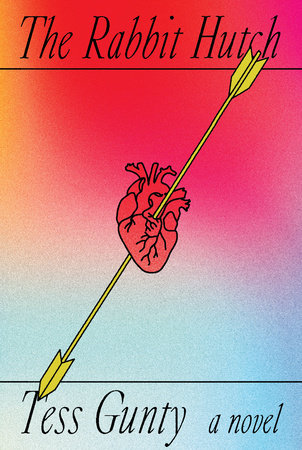
Tess Gunty, author of The Rabbit Hutch
What time of day do you write?
I read and revise during the day, but I write best at night, often until
four or five in the morning. I know that no one will contact me during that
window, so the distraction of digital communication is eliminated. Dusk to dawn
feels secret and stolen, a hinterland of a workday when the subconscious is
accustomed to monarchic reign, so it’s easier to trust associative logic. I am
nocturnal by nature, and nightfall releases herds of feral energy through my brain.
I need to steer them into work, otherwise they’ll attack me.
How do you tackle writer’s block?
Usually by reading poetry or language-driven prose. Art museums, music
performances, films, swimming, theater, hiking, comedy, volunteering, cooking,
learning, French, mysteries, painting, traveling, house projects, research
rabbit holes, friends, family, and non-human animals also help. In short:
living.
What’s the best writing advice you’ve ever received?
Here’s a sampling, mostly paraphrased. I’m not sure that all of it
qualifies as advice, but these are the soundbites that guide me, especially
during revision. Yusef Komunyakaa: This line is already there. Lydia
Davis: Always keep at least one project to yourself until it’s drafted.
Jeffrey Eugenides: “Pretend it’s the best letter you ever wrote to your
smartest friend.” Joyelle McSweeney: I am drawn to indivisible
opposites—things that are double but not binary. Joan Didion: Keep a
notebook. Anne Carson: “Edit ferociously and with joy; it is very fun
to delete stuff.” Zadie Smith: Put your manuscript in a drawer until
you become its reader rather than its writer. Jonathan Safran Foer: It
is better to write a book that nobody but you loves than it is to write a book
that everybody but you loves. Kurt Vonnegut: “Write to please just one
person. If you open a window and make love to the world, so to speak, your
story will get pneumonia.” Rivka Galchen: What is the engine?
Rick Moody: This seems like shorthand for something more interesting.
Which book(s) do you reread?
The work of Anne Carson bounteously rewards rereading. I especially love The
Beauty of the Husband, Autobiography of Red, Red Doc,
and Glass, Irony and God. Most of the Anne Carson books that I own are
cockled and warped by lakes, bath water, pool water, oceans, and seas.
What is your favorite way to procrastinate when you are meant to be
writing?
I like cooking complicated meals in the middle of the day while listening
to an audiobook, podcast, lecture—often related to science or history. I feel
almost manically ravenous for knowledge. Usually, the meal involves peeling and
chopping an unreasonable variety of vegetables. Then, after I eat, I go for a
long walk. Not only does this practice free my evenings—I can eat something
light and easy for dinner and can therefore dive into a long writing session
around dusk—but it also creates psychological weather that nourishes ideas. The
interaction between tactile, physical labor and intellectual, imaginative labor
is generative. I won’t always have wide-open pastures of time in my days, and I
intend to wander every inch of them while I can.
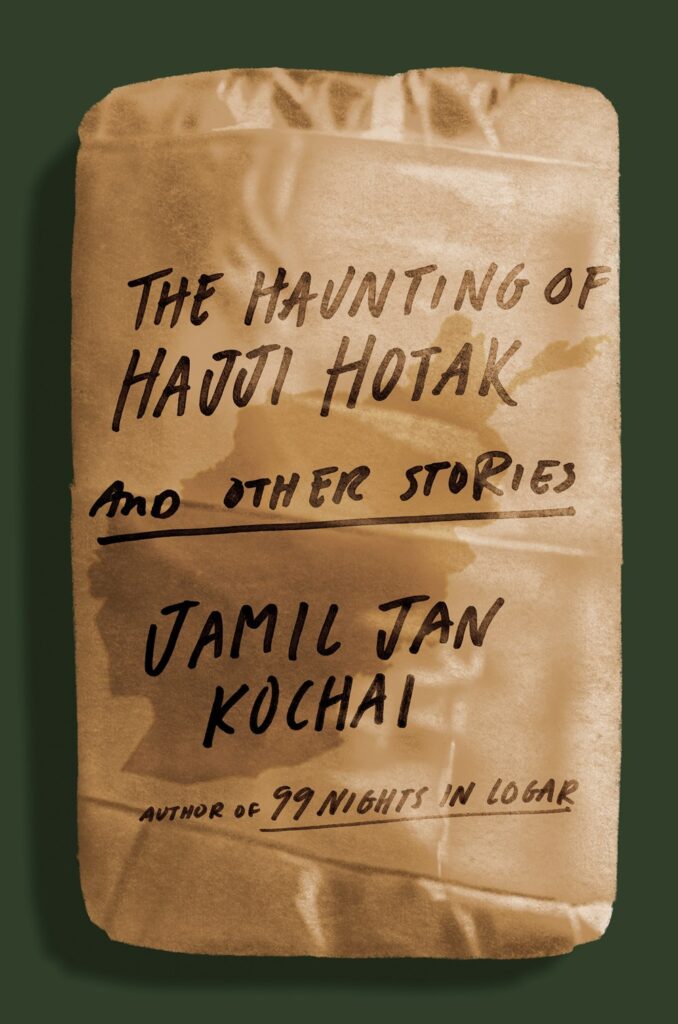
Jamil Jan Kochai, author of The Haunting of Hajji Hotak and Other Stories
How do you tackle writer’s block?
I read. I surround my writing desk with books, so whenever I run into a
problem with one of my stories, I’ll either start reading something beautiful
at random, or else, I’ll search for a specific section of a book (One
Hundred Years of Solitude is a novel I return to frequently) to give me an
idea of how I can write myself out of my problem.
What’s the best or worst writing advice you’ve ever received?
“Show don’t tell” is not necessarily bad advice, and, in fact, it’s
something I’ve told my students on occasion, but “show don’t tell” was
definitely writing advice that initially hampered my stories a great deal
because it restricted me to writing almost exclusively in scene. Thus, it took
me some time to understand the magic of “telling.”
Which non-literary piece of culture—film, tv show, painting,
song—could you not imagine your life without?
I find myself frequently returning to the films of Hayao Miyazaki. Not only
are they beautifully drawn and designed and narrated, but there is something
particularly therapeutic about Miyazaki’s movies (in particular Princess
Mononoke and Kiki’s Delivery Service) which I have not found in
any other form of art. There is something about the tone and pace of his films
that captivate but also calm me. I feel a soft, quiet joy while watching his
tales unravel upon the screen. I couldn’t imagine life without them.
What book has elicited the most intense emotional reaction from you?
I laughed out loud multiple times while reading The Idiot by
Fyodor Dostoyevsky. That book was surprisingly hilarious. The last two scenes
in “Sonny’s Blues” always makes me cry. I teach that story almost every year
and it never fails to move me. This Blinding Absence of Light is the
book that had the most visceral impact upon my body. Certain passages would
make my heart drop and I could hardly breathe. Finally, Look by Solmaz
Sharif probably gave me the most goosebumps.
If you weren’t a writer, what would you do instead?
Law. For years, I promised my father I was going to use my English degree
to apply for law school. I was enrolled at a pre-law bootcamp at UC Davis and
everything. Instead, I managed to luck my way into a career in creative
writing.
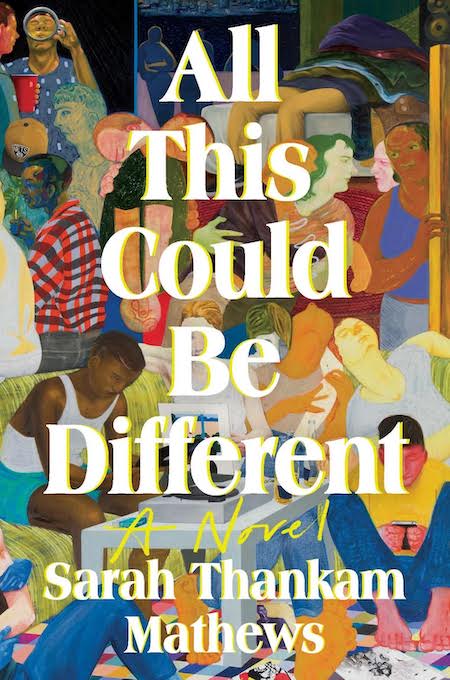
Sarah Thankam Mathews, author of All This Could Be Different
Who do you most wish would read your book? (your boss, your
childhood bully, etc.)
My landlords past and present. Would probably open up a right can of worms,
though.
What time of day do you write?
Whenever I can make it happen; that’s the most truthful answer. But my best
writing is often done late at night, when everyone’s asleep and my mind feels
like it belongs only to itself.
How do you tackle writer’s block?
I pay attention to it. I try to see what it is telling me about the work or
myself.
What part of your writing routine do you think would surprise your
readers?
Usually, I write using photograph stand-ins for most major characters, and
sometimes minor characters. Often, I’ll listen to ambient music, like
thunderstorms or drone noise, for hours. My Spotify Wrapped looks so crazy.
Which non-literary piece of culture—film, tv show, painting,
song—could you not imagine your life without?
In terms of immense impact at a formative time, issa three-way tie between Sleep
(1932) by Amrita Sher-Gil, Billy Elliot (2000) by Stephen Daldry, and Channel
Orange (2012) by Frank Ocean.
If you weren’t a writer, what would you do instead?
There have been different answers to this at different points in my life.
Maybe: high school teacher, urban farmer, or co-founder of an Indian furniture
and textile emporium with a really dank attached café.
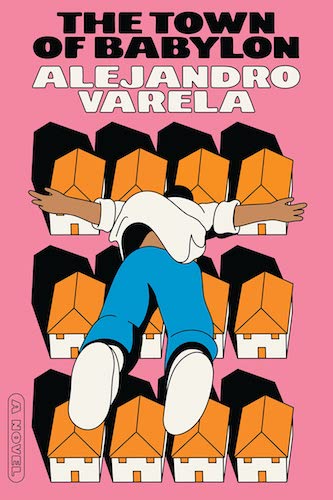
Alejandro Varela, author of The Town of Babylon
Who do you most wish would read your book? (your boss, your childhood bully, etc.)
• Ken Loach because I want him to adapt it into a film.
• Pedro Almodóvar because I want him to adapt it into a film.
• Ramy Youseff because I want him to adapt it into a TV series.
• Jamaica Kincaid because, of course.
What time of day do you write ?
Whenever I’m alone, preferably in the morning. I can edit in spurts. If I
have 20 minutes, I’ll make do. But the writing of something new, the first
draft, requires a chunk of time (hours) by myself.
How do you tackle writer’s block?
I read other people’s work.
What’s the best or worst writing advice you’ve ever received?
Best: Don’t look back while you’re writing something longform. Don’t stop
to re-read or edit.
Who is the person, or what is the place or practice that had the
most significant impact on your writing education?
A teacher’s assistant in one of my college classes was mean and maybe a
little racist, but she’d meet me in the local bar and give me writing feedback.
I’m not suggesting cruelty is an appropriate or advisable teaching tool, but I
was, then, impressionable, focused on succeeding, and oblivious to the rest. At
another point in my life, her words might have knocked me down. In a nutshell,
she told me my writing sucked and I didn’t know what I was doing—she also kept
asking me if I was “from this country.”
I was, to put it mildly, shocked, but her assessment forced me to see my work differently, to revisit my approach. I continue to appreciate direct criticism—nothing sugarcoated please—but preferably not racist. Another teacher in college, also a PhD student, would pull me aside after class and tell me I had great potential. She’d encourage me to apply for grants and programs that I never applied to because I was too busy drinking away my insecurities. And there was a teacher (in graduate school) who told me to stop using passive voice, but she was very kind about it.
What part of your writing routine do you think would surprise your
readers?
I don’t sketch or outline anything. I develop an idea in my mind until I
can no longer retain more information. Only when it seems as if I’m beginning
to forget details of the story do I sit down at my laptop and begin writing.
Which non-literary piece of culture—film, tv show, painting,
song—could you not imagine your life without?
All of the above, but film primarily. The narrative power of film has
marked my life. I am who I am because of film (and TV)—and because I grew up in
a state of financial precarity.
What was the first book you fell in love with?
The Count of Monte Cristo first held my attention. Something about
being an outsider bound me to the protagonist. His adversarial life resonated
with my own. Giovanni’s Room felt more like a breakup than a
courtship, but incredibly meaningful nonetheless. The Farewell Symphony
made me weep, in a way that could have been mistaken for love. The Bluest
Eye, however, was the first where I thought, Oh, this is the complete
package.
Which book(s) do you reread?
I don’t re-read. I will skim or pick up for inspiration. See: The
Bluest Eye response above.
What is your favorite way to procrastinate when you are meant to be
writing?
I watch award show acceptance speeches on YouTube. Recommend: Martin
Short’s Tony speech at the Emmys; Alfre Woodard at the Golden Globes; Elaine
Stritch at the Emmys; Luther Vandross at the Grammys; and Roberto Benigni at
the Oscars.
What book has elicited the most intense emotional reaction from you?
See response [above]. I’d also add An Indigenous Peoples’ History of
the United States by Roxanne Dunbar-Ortiz and The Massacre at El
Mozote by Mark Danner, both of which recount the history of U.S.-led and
-funded genocide in the Americas. Infuriating, horrifying, radicalizing work.
How do you decide what to read next?
I try to alternate between canonical writing that I’ve not yet read and
contemporary writing to keep me on my toes.
What’s one book you wish you had read when you were young?
I didn’t have the requisite attention span in my youth. I’ve grown into the
reader I am today. I fear I wouldn’t have appreciated my current favorites back
then.
What do you always want to talk about in interviews but never get to?
• Reparations for slavery
• the hypocrisy and disingenuousness of US politicians who talk about universal health care as radical and dangerous but who then treat the UK as our greatest ally despite its National Health Service—all their health care workers are government employees
• polyamory
• the importance of gender self-determination
• Palestine
• the water crises in Flint, Michigan and Jackson, Mississippi
• Puerto Rican independence
• the Song of the Year category at the Grammys
If you weren’t a writer, what would you do instead?
I’d write public health policy briefs for grassroots organizations fighting
for collective liberation.
Gayl Jones, author of The Birdcatcher
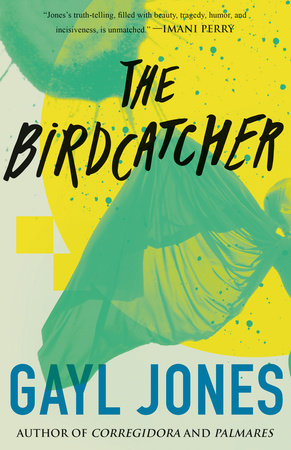
Read an excerpt from The Birdcatcher · Read Helene Atwan on working with Gayl Jones.
•
NONFICTION
Meghan O’Rourke, author of The Invisible Kingdom: Reimagining Chronic Illness

Who do you most wish would read your book? (your boss, your
childhood bully, etc.)
Great question! Probably doctors who gaslight their patients or treat
patients without much awareness of the complex chronic illnesses I write about
(including some of those physicians I saw along the way). But the book is for
everyone: People living with pain and illness, their friends, clinicians. I
keep hearing from people who don’t live with chronic illness that they
are glad they read the book, because it felt like a detective story (which I
guess means it wasn’t onerous to read!) but also left them with a new
understanding of the medical system and the bodies we all live in.
What time of day do you write?
I used to write at late night, but now I mostly write in the very early
morning. It is when I have the most focus—and my children aren’t up, telling me
jokes, needing milk, and very few people are emailing or needing things. These
days, to tell the truth, I have to write whenever the chance presents itself,
but I most love writing in the “secret” times when the world is quiet and my
mind can rove.
What’s the best or worst writing advice you’ve ever received?
Best advice: Just try to be in your chair at your desk every day. Even for
15 minutes.
Worst advice: If you’re not writing every day, you’re not a serious writer. As The Invisible Kingdom describes, I was sick for a long period of time and couldn’t write regularly. I often work with writing students with chronic illness whose health is unpredictable and who can’t write every day, and they feel confused by (and excluded from) this advice. I think writing is something you have to commit to, but in a way that makes sense for you. The idea that we can all sit down and produce, day after day, is very much shaped by forces (of late capitalism, of ableism, of incuriosity about invisible illness) that I try to interrogate in my book.
So I’m here to say: It’s OK to be a writer who doesn’t write every day! But try to be noticing/reading/thinking even when you can’t be at your desk. When I was really sick, I took notes on my iPhone notes app when I could—just a sentence, sometimes. And some of that made it into my book.
Who is the person, or what is the place or practice that had the
most significant impact on your writing education?
Ruth Chapman at Saint Ann’s School, where my parents were teachers, and
where I went to school. Her classes lit my imagination on fire and so did her
writing assignments. But it was all the teachers at Saint Ann’s who taught me
writing: Jim Halverson, Nancy White, who made me feel I could be a writer, Beth
Bosworth, whose steady commitment to writing—it was these teachers who made me
love writing and showed that a writing life was something people really
had. So often, the match that lights the flame is a middle school or high
school writing teacher.
What part of your writing routine do you think would surprise your
readers?
I wrote a lot of The Invisible Kingdom while listening to the
Brian Lehrer show on WNYC. For a period working on it, I liked to time sitting
down to write at my desk with the opening jingle of his show. It’s bouncy—my
son as a baby used to bob his head to it—and energizing. And it trained my
brain that now it was time to focus and write, like Pavlov’s dogs learning that
the bell meant it was time to eat. I still like to “start” a difficult chunk
while listening to the radio. I think it’s because I was a gymnast as a kid and
gymnasts always perform with lots of noise around; deep concentration still
comes easiest with a certain kind of ambient noise around me.
What is your favorite way to procrastinate when you are meant to be
writing?
I like to walk about and organize things in the house randomly. It’s an
optimal form of procrastination, because you leave things in better shape than
they were, you’re on your feet, getting blood moving; and it is boring and
meditative, so I find I start writing sentences in my head.
And when that flow has built up enough, I go sit at my desk. If not that, a walk: you can start a walk feeling creatively dry as the desert, but you always end it with sentences and ideas taking shape. I wrote the ending of my memoir The Long Goodbye and the ending of The Invisible Kingdom in my head on long walks (pausing to take notes). Never exercise without a phone or tiny pocket notebook. (As you can tell, some of these walks turn out not to be very good workouts.)
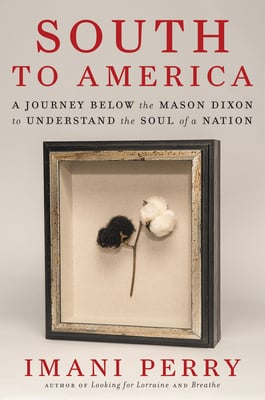
Imani Perry, author of South to America: A Journey Below the Mason-Dixon to Understand the Soul of a Nation
Who do you most wish would read your book? (your boss, your
childhood bully, etc.)
The people who I most wish for as readers are no longer living, like my
dad. He used to read every word I wrote.
What time of day do you write?
I’ve been a mother for 19 years and that has meant that I write whenever I
have a snatch of time, and I choose to feel accomplished even if I’ve only
written a single sentence. But my favorite time to write is between 4 and 6am.
What’s the best or worst writing advice you’ve ever received?
Mr. McFarland my high school Writing Seminar teacher taught us how to use
the rhythm and length of sentences deliberately.
Who is the person, or what is the place or practice that had the
most significant impact on your writing education?
The South, specifically my birthplace, Birmingham Alabama. Language is so
artful there. Even the silences speak volumes. My favorite part is the
nonverbal communication like the polyrhythmic “mmm” sounds in a conversation. I
try to channel that kind of everyday art in my writing.
What part of your writing routine do you think would surprise your
readers?
I spend months and sometimes years outlining. Form is hugely important to
me, but I want to ultimately achieve natural form, like the geometry of a leaf.
I don’t want the beams and seams to show. So, I don’t think it’s necessarily
apparent to readers how much architecture there is in my writing. At least, I
hope not. But it’s there.
Which non-literary piece of culture—film, tv show, painting,
song—could you not imagine your life without?
The Commodores song “Zoom.” It’s a perfect song to me.
What was the first book you fell in love with?
Ezra Jack Keats’ The Snowy Day. Here’s this little Black child in
a red snowsuit named Peter, who makes his mark on the world by happily tracking
his way through the snow. It’s simple but also profound. I have such a strong
visceral memory of that book that I can recall how it felt in my hands when I
was 5 years old. And the colors are muted yet gorgeous and rich. Reading it was
an ideal experience.
Which book(s) do you reread?
I reread a lot, but Moby-Dick and Song of Solomon most
frequently.
What book has elicited the most intense emotional reaction from you?
Reading is generally a deeply emotional event for me, but in the last
couple of years Douglass Stuart’s Shuggie Bain stands out for me for
how he captured the grief of living. I cried and laughed all the way through
that book and I simply adore the protagonist, Shuggie.
How do you decide what to read next?
If I hear exceptional praise of a writer who I’ve never heard of, I try to
start a book by that person as soon as possible. Especially if they’re from
somewhere I’ve never been.
What’s one book you wish you had read when you were young?
I wish I had read Saramago’s Blindness when I was in my 20s
instead of in my 40s. I re-read it with my brilliant 15 year old cousin Gianna
last year and I loved witnessing how it affected her. Learning what Saramago
teaches us about the human condition as a young adult, especially about fear
and making do, would have been so useful for me.
What do you always want to talk about in interviews but never get
to?
Craft. I like talking about the subject matter of my writing of course, but
there’s so much content in composition as well. I’m a hopeful romantic and a
lot of the romantic part of writing is in craft.
If you weren’t a writer, what would you do instead?
Well, I would still be a professor. But I would also love to be a textile
designer. And if I could sing well, I would be a vocalist and I would be
insufferable. I’d be singing every sentence.
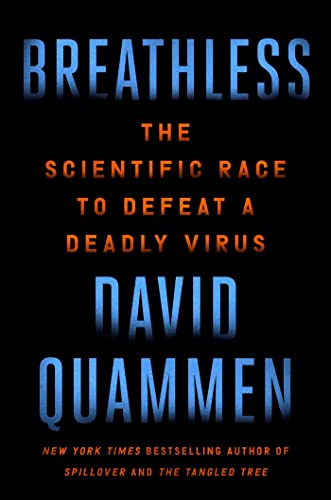
David Quammen, author of Breathless: The Scientific Race to Defeat a Deadly Virus
How do you tackle writer’s block?
Writer’s block is an interesting, delicate subject. In 52 years as a
professional writer, I’ve never experienced it. I tend toward thinking that
“blocked” is the wrong metaphorical adjective for when writers can’t write. I
think “empty” might be better. But I’m not complacent or unsympathetic about
this; my view could change based on experience, or I might find myself empty at
some point. I think of writer’s block in the same terms as insomnia. I sleep
well . . . but knock wood. It could get me too.
What’s the best or worst writing advice you’ve ever received?
Worst advice: Always make an outline. Bunk. Careful, detailed outlines—it
seems to me—yield boring, schematic books.
Who is the person, or what is the place or practice that had the
most significant impact on your writing education?
Robert Penn Warren was my teacher, my mentor, and my friend. I never took a
writing course from him, and he never told me how to write. But he was
immeasurably supportive of me, and he showed me by example one very important
truth: A writer is not required to be only one kind of writer. Warren
wrote novels, poetry, literary criticism, cultural history, biography. He was a
man of letters.
Which book(s) do you reread?
I believe strongly in the value of rereading great books. It’s one of the
fundamental ways of teaching yourself to write. The first time through, you see
what the author did; second time through, you start to see how he or
she did it. I’ve reread all of Faulkner’s major novels, at least one of them (Absalom,
Absalom!) roughly eleven times. I also reread Joan Didion, Raymond
Chandler, John Le Carré, and The Sun Also Rises, among others.
In nonfiction, Barbara Tuchman merits rereading because the history is so rich
and dense, and her prose is so wry and deft. David Fromkin’s A Peace to End
All Peace I will also keep rereading, again because there’s so much to
absorb and remember. Of course Anna Karenina. In the past several
years, for obvious reasons, I reread Camus’s The Plague. It was very
analgesic. And I’ve reread On the Origin of Species a few times and
probably will again: a book so straightforward yet profound and epochal, and
still right about so many things, that it deserves to be read carefully and
repeatedly. It strikes me as crazy that a young person can get a Ph.D. in
evolutionary biology, true fact, without ever having read Darwin’s great book.
People think they know what’s in it from cultural osmosis. They don’t.
If you weren’t a writer, what would you do instead?
Among the roads not taken, for me, were to be an entomologist or, like my
friend Harry Greene, a herpetologist. I’m probably not smart enough to be a
molecular evolutionary biologist, alas, and that option never occurred to me
when I was young (molecular biology was young too), but I suspect that would be
vastly satisfying too. On another note, my role model when I was 17 was Tommy
Smothers. Comedy and music. But among other barriers along that route was the
fact that, by empirical evidence, it was established that I had no talent
whatsoever for music.
Ingrid Rojas Contreras, author of The Man Who Could Move Clouds: A Memoir

What time of day do you write?
I mostly write in the morning, just after getting up. I love the quality of
my thinking then, how it’s so close to whatever happens when I dream. I always
try to take advantage of that time. The other time I love to write is
late at night, either before or after dinner. Words come differently then too.
Any other time of day, I feel too awake, and the writing I do tends to come out
too calculated.
How do you tackle writer’s block?
If I get stuck in a particular piece, I track back until I come to the last
place where things in the writing were really singing. I then see if there are
different decisions I can take. I try to branch out the story in a new way. If
this still leaves me stuck, I go outside. I see friends, catch a movie, go
rollerskating, look at some art, spend time in nature, go swim. Sometimes
there’s something that I need to think about, and it needs to happen off the
page, and the best way for me to do that is by doing something else entirely.
Who is the person, or what is the place or practice that had the
most significant impact on your writing education?
I always say that my first writing school was listening to my mother tell
stories out loud. We did that a lot as a family. Colombia is also a place where
oral stories are often told in plazas and street corners. There is a rich
tradition there. My mother is the best storyteller I know. And, as I started to
take writing seriously, the richest engagement I have found with craft, has
been thinking about how my mother tells story. I love to notice the shape of
her stories, and her language. She has incredibly precise, hilarious language.
Which book(s) do you reread?
I love to reread Ocean Vuong’s On Earth We’re Briefly Gorgeous,
Louise Erdrich’s Love Medicine, Gabriel García Marquez’s One
Hundred Years of Solitude, and all books by Solmaz Sharif, Natalie Diaz,
and Kaveh Akbar. Teaching is so wonderful, because you really get to re-read a
lot of books, and think about them deeply alongside others. For my classes, I
favor a lot of Toni Morrison. Her work is so powerful, and a joy to re-read.
What is your favorite way to procrastinate when you are meant to be
writing?
I have a rock microscope and sometimes will just start to look at random
things on it. Sometimes rocks, other times things I have around my house that I
am curious about. I have spent a long time studying my own hand and nails up
close. We don’t often get to see the blown-up texture of things, and I find it
deeply fascinating. My favorite rocks to look at are translucent crystals,
because under a microscope, with both your eyes fitted into the eyepiece, it
starts to feel like you’re floating above a moonscape.
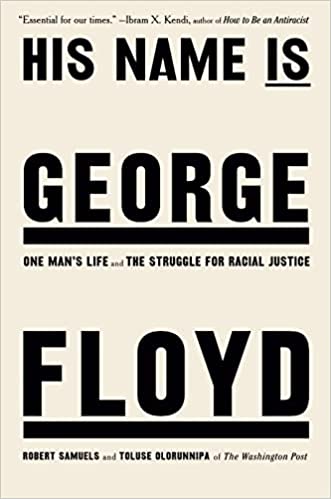
Robert Samuels and Toluse Olorunnipa, authors of His Name Is George Floyd: One Man’s Life and the Struggle for Racial Justice
Toluse Olorunnipa
How do you tackle writer’s block?
I’m a fan of a good nap to reset and refresh the brain. For me, writer’s
block is a sign that something is off in the delicate balance required to
write, and I rarely get much out of trying to force it or power through the
mind fog (much respect to those who have the willpower to do that). Of course,
deadlines are real and when they’re fast-approaching, there’s often no choice
but to try to keep writing. If I can’t lay my head down and close my eyes for a
few minutes, I try to take a walk, or listen to a song, or flip to a random
page of another book and read a little to see if something might click. When
all else fails, I’ll steal a line from Yoko Ogawa, author of The Memory
Police, who answered this same prompt with these incisive words: “By just
writing. Even when I can’t write, I write.”
Who is the person, or what is the place or practice that had the
most significant impact on your writing education?
My parents—whose own improbable journey from small villages in Nigeria to
America was paved by education—instilled in me a reverence for books from an
early age. They would encourage me to approach every task with the exquisite
eye for detail of a writer. “Do it in a way that you would be proud to put your
signature on it,” my mother would say, after instructing me to re-clean the
bathtub. If there be any precision or meticulousness in my writing, I owe it to
my parents who never stopped making me believe I could be excellent.
The “place” would be the Leon County Public Library in Tallahassee, Florida,
where my father deposited me and my siblings for hours on end during the
summers while he was working. With nothing else to do but read, I lost myself
in worlds fashioned by imaginative authors, and developed a love for literature
and libraries that endures to this day.
Which non-literary piece of culture—film, tv show, painting, song—could
you not imagine your life without?
Nollywood movies, Afrobeats, and Nigerian food. The artistry from the land
of my ancestors is bursting at the seams with beauty, drama and joy.
It’s almost cheating to describe any of this as non-literary, as Nigerian culture is so steeped in storytelling and language—but it gives me so much joy to see the world come to appreciate the intricate magnificence of those stories.
What is your favorite way to procrastinate when you are meant to be
writing?
Watching YouTube videos of battle rap. As a writer, I marvel at the lyrical
agility of people who can do such mind-boggling things with nothing but their
minds and the 26 letters of the English language. The puns, polysyllabic rhyme
schemes, double- and triple-entendres, metaphors, alliteration and humor all
mixed with unhealthy levels of aggression serve to make the entire enterprise
magically ridiculous.
What book has elicited the most intense emotional reaction from you
(made you laugh, cry, be angry)?
The Holy Bible.
*
Robert Samuels
Who do you most wish would read your book? (your boss, your
childhood bully, etc.)
My friends’ children, in fourteen or fifteen years. So many of them were
between the ages of two and four years old when George Floyd died. In so many
ways, I wrote the text for them, hoping they would be able to pick up His
Name is George Floyd to understand this incredible moment that
happened when they were just getting started. I imagined them picking it up in
a bookstore or in a classroom, marveling at what has changed in the world ,
maybe getting a little upset at the things that have not changed, and gaining a
deeper of understanding of the reasons why things are the way they are.
How do you tackle writer’s block?
I try to find inspiration in things that have nothing to do with
traditional writing. I’ll watch old figure skating clips (Michelle Kwan’s 2000
and 2001 world championship long programs are two faves) of times when a
competitor digs into themselves and finds something amazing. I’ll hype myself
up by watching 1980s professional wrestling promos from Macho Man Randy Savage.
If that does not work, I’ll watch one of my favorite movies (My Fair Lady and 1917) or listen to my favorite verses in Hamilton (the last verses of “My Shot” and “The Battle of Yorktown”) and remind myself that such brilliance came from human minds and hands, which encourages me to go back to the keyboard and try again.
What part of your writing routine do you think would surprise your
readers?
I always heard writers talk about the importance of reading stories out
loud. That never worked for me until I learned I needed to read my stories out
loud to a someone else. It is best when the person is a little sleepy. That
means, I often read passages to my partner late at night. I read them with
voices and emotion, like I’m reading a bedtime story to a child. If my partner
isn’t captivated, I take it personally and blame the writing—not the
sleepiness. It’s my signal to rewrite the passage to make it more interesting.
Which non-literary piece of culture—film, tv show, painting,
song—could you not imagine your life without?
This is totally not the typical choice for a person writing about race and
racism, but Jimmy Eat World’s 2007 Chase this Light has been my
life soundtrack for the past 15 years. Judge me if you must.
If you weren’t a writer, what would you do instead?
I’m not sure I’m equipped to do anything else! When I was growing up, I
really wanted to be an animation storyboard artist, which I guess is still
writing. I still have a fascination with archaeology and anthropology; the hunt
for artifacts and making sense of relics of the past seems very similar to what
we do as journalists.
•
POETRY
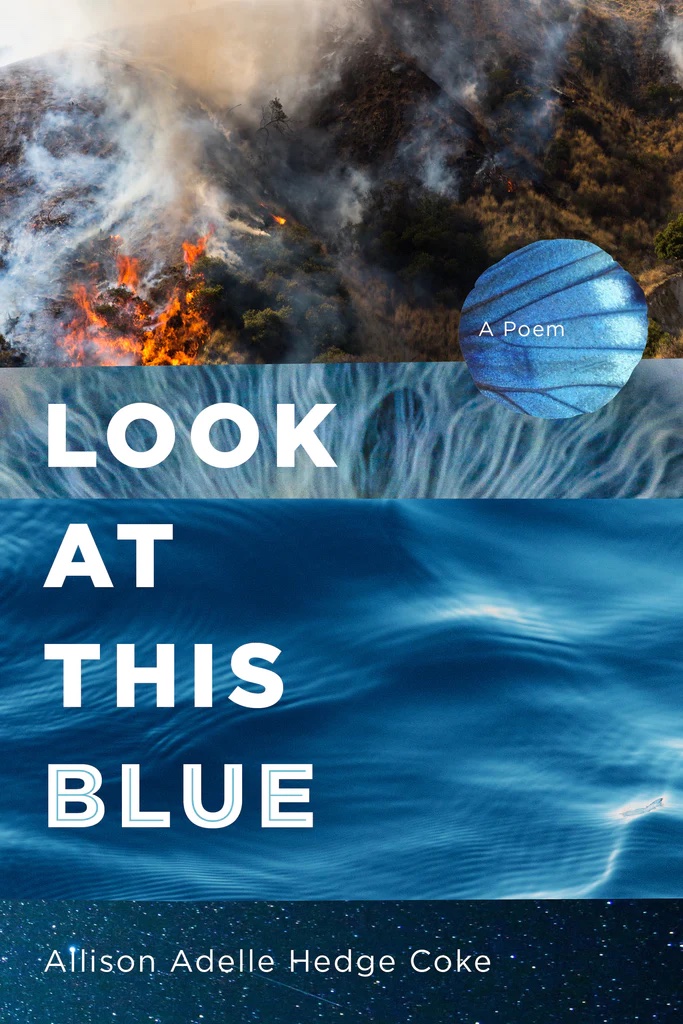
Allison Adelle Hedge Coke, Look at This Blue
How do you tackle writer’s block?
Have multiple projects going so that when procrastination hits (or you’re
more in the music in your head than words in the fingers for any particular
work) you can leap off and dive into an unaffiliated work-in-progress to
distract yourself from your offness.
What’s the best or worst writing advice you’ve ever received?
“You are too young for a first book.” “You are too old for any emerging
writer’s award.” (Said to me the same year in grad school, in my thirties.)
Truth is, you are never too young or too old for anything in writing. The
result might be different than at another time, but it doesn’t negate its
potential.
What part of your writing routine do you think would surprise your
readers?
That the routine changes shortly after it establishes. Improvisational,
freewheeling, freestyle routines suit me. Will return to some that worked well,
but not all.
What was the first book you fell in love with (why)?
Beautiful Joe, at four. A harrowing and complicated tale. It was
my first novel. (Who doesn’t love their first novel?) My sister claims she
listened to me cry myself to sleep each night while reading it. (This part is
not in my memory.)
Which book(s) do you reread?
Sula, One Hundred Years of Solitude, Flight to Canada,
Neon Vernacular, Dien Cai Dau, Avalanche, Hurdy-Gurdy,
The Redshifting Web, Neruda & Vallejo: Selected Poems, Native
Guard as an example of the too many books to mention. Read everything at
least twice! The next often reveals more.
What is your favorite way to procrastinate when you are meant to be
writing?
Watching films. The greatest escape since silent pictures. Ease in and soon
you’ve forgotten all else.
Sharon Olds, Balladz

Who do you most wish would read your book? (your boss, your
childhood bully, etc.)
The image this question brought up in me was the experience (which I’ve
never had, or expected!) of getting on the subway and seeing someone sitting
reading a book of mine!
Who is the person, or what is the place or practice that had the
most significant impact on your writing education?
Galway Kinnell and I used to share new-written poems a lot, and out of that
experience came the experience of workshops in which everyone, every morning,
brought in a brand new first draft, and we talked about them—without criticism.
Praise only (truth only)!
Which non-literary piece of culture—film, tv show, painting,
song—could you not imagine your life without?
Watching basketball on TV, and reading detective and mystery fiction.
Which book(s) do you reread?
Moby-Dick. Also favorite mysteries, if enough time has passed
since I last read them.
What is your favorite way to procrastinate when you are meant to be
writing?
I love talking about (sometimes dancing about!) rhythm, meter, structure.
Counterpoint between visual lines and heard lines. Something I think of as
cut-and-thrust dirty dancing moves. The body of a poem, the spirit of a poem.
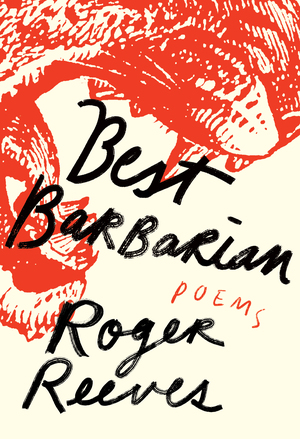
Roger Reeves, Best Barbarian
Who is the person, or what is the place or practice that had the
most significant impact on your writing education?
There have been several people that have had a significant impact on my
writing education and practice. First, Bill Connolly—the advisor to my high
school newspaper. Then, Daniel Black—my college writing mentor who worked with
me and believed in me when I was at the lowest points of my life. Lastly, James
Magnuson—the head of the James A. Michener Center for Writers. Magnuson told me
to treat writing like a 9 to 5, to show up every day for it whether I felt like
it or not. From then on, I did.
Which non-literary piece of culture—film, tv show, painting,
song—could you not imagine your life without?
Jazz. From big-band to bebop to spiritual jazz to the avant-garde. I learn
so much about composition from jazz musicians.
What was the first book you fell in love with?
The first book I fell in love with was Ralph Ellison’s Invisible Man.
I was seventeen years old, had just finished my junior year of high school,
and, in preparation for AP English, was given five books to read for the
summer; Invisible Man was one of them. Walking home on the last day of
school, I opened up the book and began reading it. I had never done this
before—tried to read while walking and have only done it once since.
The book captivated me—its size, its plot, its language. I felt as if I were given a secret or a piece of incendiary literature. The book was a sort of contraband, and I wondered if the drivers in each passing car might be looking at me suspiciously. I felt such a thrill reading the book and for years after, I returned to the book and read it at least once every year. It was the first thing that I read to my daughter when she was born and in the neonatal intensive care unit with tubes and cords running in and out of her. Invisible Man is a book I constantly turn to as I work on my novel. That and Morrison’s Beloved of course.
How do you decide what to read next?
Often, I’m reading several things at once. Books that help me write poems.
Books that help me write essays. Books that help me write fiction. Then, I’m
reading books about jazz, which is one of my favorite areas to read about that
is and is not connected to writing. Then, I’m reading books about economies,
class, and history. Then, I’m reading travel narratives and essays on
photography. So how I decide what next to read is dependent upon these
categories above, which means that sometimes I’m reading about geology or
astronomy. I just love to read any and all things.
If you weren’t a writer, what would you do instead?
If I weren’t a writer, I hope that I would have pursued music or opened a
school or become a pediatrician.
Jenny Xie, The Rupture Tense

How do you tackle writer’s block?
The concept of writer’s block implies there are stages of creative
obstruction that demand unclogging, and that the resuming of writing is the
needed release. In own my experience, it helps to remind myself that there are
forms of art-making and creative stimulation that aren’t tied to just fastening
language to the page. Remaining in silence, absorbing art and thinking that
raises one’s temperature, being attuned to vibrations that emerge from
complicated entanglements in life and living—these are also vital stages and
forms of creative engagement.
What part of your writing routine do you think would surprise your
readers?
I resist writing poems longhand. There’s something about the velocity of
typing, the rhythmic patter of keys, and the ease of being able to delete,
write over, reformat, and see instantaneous edits and changes that makes
composing on a computer my preferred medium. I also keep an unsettling amount
of tabs open on my browser.
What was the first book you fell in love with?
Encountering Sandra Cisneros’s The House on Mango Street was an
early catalytic reading experience. Hearing a young voice narrate interiority
with demotic language, and with the abiding power of metaphoric invention, was
intoxicating and enabling.
Which non-literary piece of culture—film, tv show, painting,
song—could you not imagine your life without?
Sitting in the hushed dark of a movie theater, happily alone yet
simultaneously among many, taking in what blazes up on the screen.
What motivates you to write?
What lies outside of narrative enclosure, what eludes telling, the vast
reaches of the unlanguaged.
John Keene, Punks: New & Selected Poems

Which non-literary piece of culture—film, tv show, painting,
song—could you not imagine your life without?
I’d find it hard to live without any of these artistic genres. I love them
all.
What is your favorite way to procrastinate when you are meant to be
writing?
Reading. Frequently these days something on the internet (an article,
social media, etc.) but usually someone else’s work I admire, a book of poetry,
a short story, a creative nonfiction essay, a biography snippet, etc.
How do you decide what to read next?
I often have required reading for my full-time and advisory job(s), so that
determines the order of what I read and when I can read for pleasure.
What do you always want to talk about in interviews but never get
to?
The ideas and concepts in my work; customarily I am asked about form, style
and themes, but I would love to puzzle through some of the ideas and concepts I
am trying to explore.
If you weren’t a writer, what would you do instead?’
Something else creative. I drew before I ever wrote a word, so I would
probably be an artist of some sort, and a teacher, because I love teaching and
working with students and colleagues.
TRANSLATED LITERATURE
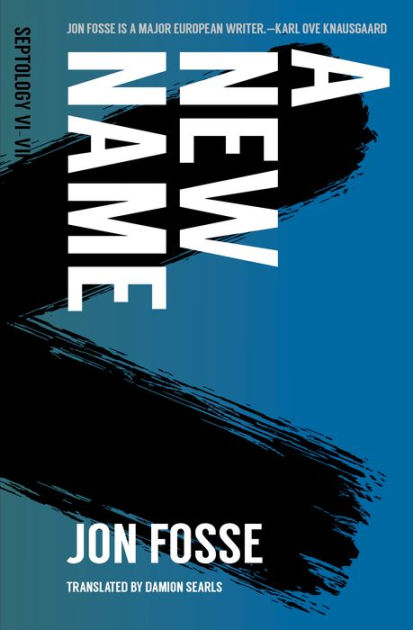
Jon Fosse, author, and Damion Searls, translator of A New Name: Septology VI-VII
Jon Fosse
What time of day do you work?
I’ve always preferred to start writing right after I wake up so I can move
into writing directly from sleep with its dreams and nightmares. Writing is a
more or less conscious dream, and that’s how I try to write. The time has
changed, though: I used to start at around eight in the morning and write until
1 or 2; for the past ten or fifteen years I’ve woken up earlier, started at
five or so when it’s still night, and written until 9 or 10 in the morning. I
do sometimes write in the afternoon, but then it is mostly minor corrections; I
can also translate well in the afternoon.
How do you tackle writer’s block?
I’ve been a professional writer for forty years now and I have never
experienced writer’s block. My first novel, Red, Black, was published
when I was 23 years old, and now I’m 63 and I’ve published more than fifty
books. My idea is that I have to write my own texts in certain periods, then
take a break, and in those in-between periods I can do other things. I used to
work a lot as a reader for my publisher; I also wrote prefaces to books, essays
for newspapers and magazines, and so on. In recent years I have mostly
translated during these breaks, or else I’ve written version of plays, mainly
Greek tragedies, for this or that theater.
Perhaps I can also mention that I’ve started to write by hand in the past few years, with a good fountain pen in a notebook with good paper. Actually I switch between different pens and different colors of ink. Writing like that, instead of on a computer, I can write any time and anywhere. It’s a much bigger change than I thought it would be.
What’s the best or worst writing advice you’ve ever received?
I think the best advice I’ve learned from life is to listen to yourself,
not to others. Stick to what you have, not to what you want to have or wish you
had. Stay close to yourself, to your inner voice and vision and how you want
the writing to be.
When my first novel was published it got lots of bad reviews, and they haunted me, and if I had listened to them I would have stopped writing. I decided to listen to myself instead—to what I knew. Ever since then that has been a kind of rule for me.
Of course this goes both ways. For some years now my writing has been well received, and I’ve received many awards and so on, but I try to not let it influence my writing in any way. Good reaction or bad reaction: it doesn’t matter, I stick to what I know, what I feel I need to write, what I can do and not what I want to do. For example, my plays were a great success but I decided to stop writing plays, and I stopped for many years. Instead I went back to where I started, writing my kind of fiction and poetry.
*
Damion Searls
What part of your translating routine do you think would surprise
your readers?
I think people are surprised to hear that I try not to read a book before I
translate it; I try to save the first reading for while I’m translating. (I say
“try” because for some projects, I pitch a publisher myself after I’ve read a
book, or else I have to write a report about the book or something before a
publisher takes it on.) Whoever reads the translation is going to be reading
the book for the first time too, and I want the translation to give readers
that experience. I also rarely look back at the original during the last few
drafts—at most to check a word here and there. I’m revising to make the English
work better, I already know what the original says. What both of these
strategies have in common, I think, is that I’m trying to keep my reading
experience intact, because that’s what I’m trying to convey or create for
others.
If you weren’t a translator, what would you do instead?
I always used to say I would be, or I wish I was, a film editor. I don’t
know if it’s the same now with all the digital technology in that process, but
when I was younger I always liked the idea. Maybe because it’s the same
reactive or responsive kind of creativity, plus with something tactile and
concrete to touch and look at.
Scholastique Mukasonga, author, and Mark Polizzotti, translator of Kibogo

Scholastique Mukasonga
How do you tackle writer’s block?
I’m surely an atypical writer. I was made a writer by the genocide of the
Tutsi in Rwanda. I didn’t have time to go looking for literary models. I never
took writing classes. When I received, on a single sheet of paper torn out of a
school notebook, the names of my loved ones who had been murdered simply
because they were Tutsi, I understood that I was the only survivor of my
village, Gitagata. I was gripped by anguish. I was the only remaining memory of
them. Was I going to lose that memory by retreating into silence, or despair,
or madness? The least I could do was list the names of those who would never
have proper graves. I had to name them one by one, without forgetting a single
one. It was the sacred duty of the survivor. And so I began to write, and that
list of names on a simple sheet of paper gradually became my first book, Cockroaches,
a paper tomb for those who would never have a sepulcher.
What part of your writing routine do you think would surprise your
readers?
I wrote my first books in cemeteries. I live in a village on the Normandy
coast, and it was there that the D-Day landing took place, on June 6, 1944. The
Norman countryside is dotted with cemeteries. One of them, a Canadian cemetery,
became my “writing room.” I can still see myself sitting at the foot of a cross
armed with a sword (this place is called Sword Beach), with rows of identical
grave markers on either side, each bearing the name of a soldier and the
insignia of his regiment. According to the register, there are 884 of these
markers. There’s a grave I visit as often as I can. On the tombstone it says: A
SAILOR 6-7th 1944 KNOWN UNTO GOD. I ask this unknown soldier forgiveness for
blending his mourning with that of my loved ones, who will never have graves.
What was the first book you fell in love with?
Books were scarce in Rwanda. In primary school, in Nyamata, the teacher
rarely handed out textbooks. There was perhaps one book for two or three
pupils. Barely had we finished reading a story than he took back his precious
books and locked them in a closet. At the lycée in Kigali, I don’t recall
seeing a library. The books weren’t for everyone, but were reserved for the
instructors.
Only when I was in exile in Burundi did I finally have a book to myself. I found it abandoned on a table in the minor seminary that had taken in refugee Rwandan girls. It had a beautiful red-and-gold cover and a mysterious title, The Count of Monte Cristo. I borrowed it and never gave it back. At the college for social workers in Gitega, where I remained alone in the empty dormitory, I escaped just like Edmond Dantès from the Château d’If. I dreamed that maybe I, too, could return home and discover a treasure. I didn’t know then that my treasure would be writing.
Which book(s) do you reread?
My bedside reading is Elie Wiesel’s Night and Primo Levi’s If
This Is a Man, about the Shoah. These books didn’t serve as models. I
discovered them only after writing and publishing Cockroaches. It was
reviewers who made the comparison. I was comforted to note that, faced with
similar fates, we reacted in the same way. I adopted this statement of Elie
Wiesel’s: “For the survivor who chooses to testify, it is clear: his duty is to
bear witness for the dead and for the living. He has no right to deprive future
generations of a past that belongs to our collective memory.”
If you weren’t a writer, what would you do instead?
Becoming a social worker was probably the only choice I’ve made in life.
When I decided to enroll in the school for social workers in Butare, in Rwanda,
I believed that after getting my degree I could return to my village and bring
back knowledge to those women who had been barred from attending school because
they were Tutsi. I wasn’t able to practice my profession in Rwanda, but I was
able to practice it in Burundi and France. After the genocide that murdered my
loved ones, I lived with survivor’s guilt. I could easily have tipped into
madness. But there were my “charges,” who needed their social worker’s help. I
didn’t have the right to be weak.
That profession helped me bear the burden of being a survivor. It’s what gave me back the strength to be useful to someone else, and what allowed me to rebuild my life and to write.
*
Mark Polizzotti
What time of day do you work?
Any time and any place that I can. Since I juggle my translation and writing
activities with a full-time job, I have to take my opportunities where I find
them. This might be mornings before work, weekends and holidays, or other
stolen moments (I’m writing this on a commute). Transportation provides the
best opportunities for translating: train rides, air travel, any extended trip
that doesn’t require frequent transfers or disruptions. Translation is an art,
a craft, a calling, a mission, a job, a sacred trust—and, fortunately, it is
one more thing: portable.
How do you tackle writer’s (or translator’s!) block?
One wonderful aspect of translation, for me, is that there is no block: the
text is always there, ready to be worked on, endlessly available. Gregory
Rabassa quipped that the translator is “the ideal writer because all he has to
do is write; plot, theme, characters, and all the other essentials have already
been provided.” Translation activates the pure pleasure of language, of working
with and playing with and grappling with language. Often, if I’m concurrently
engaged in a piece of writing and I find myself stuck, translation is what
breaks down the block, by granting me reentry into the matter of language, its
mysteries and inspirations.
What’s the best or worst writing advice you’ve ever received?
When I was first starting out as a publisher, I was taken aside by a
slightly more senior colleague and warned, in well-meaning tones, that if I
wanted to succeed in this business, I should be prepared to devote myself to it
exclusively and give up that translation nonsense. In the years since, I’ve
translated over fifty books, written a dozen, and maintained a long career in
book publishing. But the main thing is, the more I continued to translate and
write, on the one hand, and to edit, on the other, the more I found that these
activities cross-pollinated one another. Editing sharpened my writing; writing
improved my translation; translation made me a better editor: they’re all
facets of the same activity.
Which non-literary piece of culture—film, tv show, painting,
song—could you not imagine your life without?
Film and music have always been essential to me; I couldn’t imagine life
without them. As a writer, some of my most enjoyable projects have been on
those two subjects. The famous saying, attributed to everyone from Frank Zappa
to Martin Mull to Elvis Costello, is that “writing about music is like dancing
about architecture,” and that applies to cinema as well. For me, film and music
fill a crucial emotional space, and the best way I know of engaging with them
is to just keep dancing.
What is your favorite way to procrastinate when you are meant to be
working?
I seem to recall reading once that John Updike could not start his writing
day without first polishing the doorknobs in his house. Apocryphal though it
might be, it’s as good a delaying tactic as any. For me, it could be household
chores like cleaning the apartment (always with music on), or it could be
taking a long walk if the weather is too seductive to stay inside. The point of
procrastination is to give yourself air and room to breathe, space for thoughts
to begin formulating and fornicating—without which any writing is bound be
empty and insubstantial, and eventually discarded.
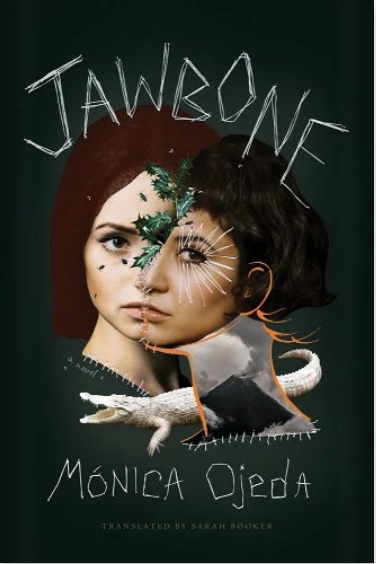
Mónica Ojeda, author, and Sarah Booker, translator of Jawbone
Mónica Ojeda
What time of day do you work?
It changes for every book. I wrote Jawbone at very different times
of the day because I didn’t have much time and I was very obsessed with it. I
couldn’t let it go, couldn’t stop writing. And now I’m working on a new novel
and I’m writing only in the mornings, because of the light. For this book I
need natural daylight.
What’s the best or worst writing advice you’ve ever received?
To live dangerously. It was not said as a metaphor, but literally. And I
think that to write I need the opposite: to live calmly, slowly.
Which non-literary piece of culture—film, tv show, painting,
song—could you not imagine your life without?
My life would be definitely worse if it wasn’t for ”Tonada de luna llena”
de Simón Díaz.
What was the first book you fell in love with?
Moby-Dick. Before I didn’t know what love was.
Which book(s) do you reread?
Sollozo por Pedro Jara de Efraín Jara Idrovo and El libro de
las preguntas de Edmond Jàbes.
*
Sarah Booker
What time of day do you work?
I am generally able to turn to translation in the late afternoons and early
evenings. This tends to be my most productive time of day, when I work best. It
is also when I’m not doing my other job, which is teaching.
How do you tackle writer’s (or translator’s!) block?
To be honest, translation is often my cure for blocks on other kinds of
work, be that lesson planning or academic research. However, when I find myself
stuck with a certain part of a translation, I try to switch gears by revising
other sections of the book, doing a very quick and dirty translation of a new
section, or just moving to a different chapter.
Who is the person, or what is the place or practice that had the
most significant impact on your literary education?
My dad, who was a botanist but also a lover of literature. I have such
clear memories of talking to him about books, such as the day, when I was a
teenager, that he told me about Gabriel García Márquez’s One Hundred Years
of Solitude in Gregory Rabassa’s translation and showed me the complexity
and beauty of the novel’s opening sentence. It made me look at writing in a new
way.
What is your favorite way to procrastinate when you are meant to be
working?
Cooking elaborate dishes that just barely resemble the original recipe.
What book has elicited the most intense emotional reaction from you
(made you laugh, cry, be angry)?
Mariana Enríquez’s Nuestra parte de noche (Our Part of Night
in Megan McDowell’s translation) elicited a lot of intense emotions. The story
and writing really clicked for me, but I also read it during the very early
days of the pandemic when everything had a different intensity to it.
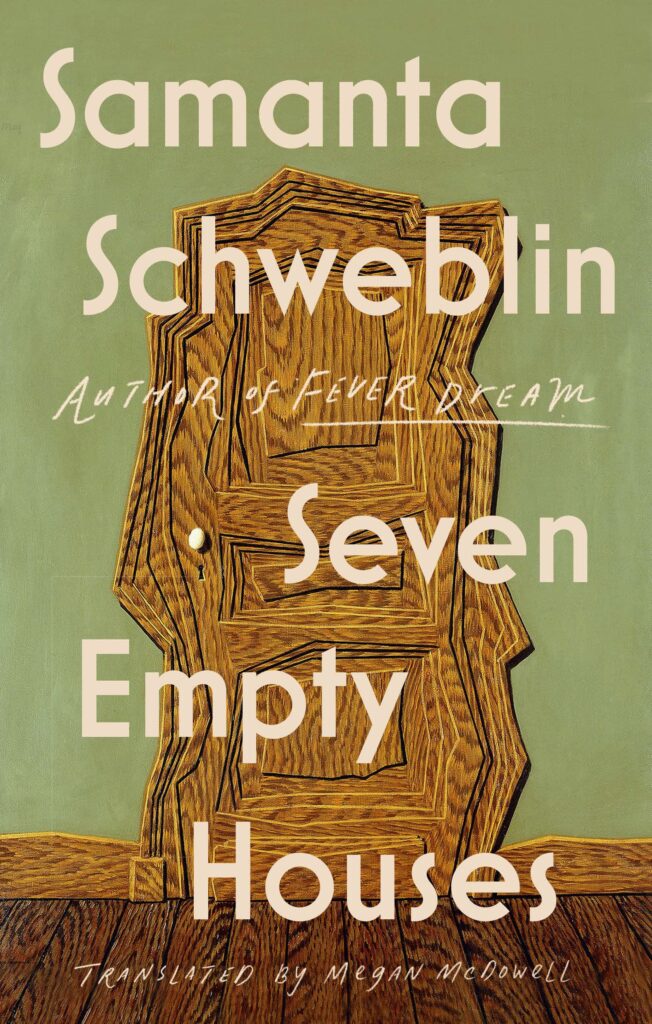
Samanta Schweblin, author, and Megan McDowell, translator of Seven Empty Houses
Samanta Schweblin
Who do you most wish would read this book? (your boss, your
childhood bully, etc.)
I hope my ex-mother-in-law doesn’t read “Two Square Feet.” She was the one
who told me the story of how she sold her wedding ring and what she used the
money for, asking me to please never tell anyone about it. Luckily, hers is a family
that doesn’t read much literature.
Who is the person, or what is the place or practice that had the
most significant impact on your literary education?
My maternal grandfather. He gave me my first collections of stories by
Borges and Julio Cortázar, and he was the one who encouraged me to write too.
First a diary, which we started together when I was around seven years old,
recounting the impressions of the day and the walks we took together. Later,
something very similar to writing fiction: we read poetry, and we wrote in the
diary only the words or the lines that caught our attention the most,
generating something new that we used to read out loud.
What part of your writing or translating routine do you think would
surprise your readers?
Okay, this may sound a bit silly, but I can’t write a word if I don’t tie
my hair up in a ponytail or bun first. No matter how much I’m going to write, I
need my hair to feel taut, as if I were just about to run a marathon.
Which book(s) do you reread?
Far Away From Home is probably the book I’ve read the most times
in my life. I don’t know if it’s my favorite book, but I read it for the first
time when I was a teenager, at a very special moment in my life when I felt
strong, open to everything strange and unknown, open even to the possibility of
the pain that could come with the adventure of living life fully. It is a book
that brings me back to that place. His poetry cradles me, his darkness brings
me back to my feet. It is like medicine for the soul.
What is your favorite way to procrastinate when you are meant to be
working?
Eating toast with butter (this is an ideal combination, because you have to
wait about two minutes for each piece of toast), and learning new German
vocabulary that I will probably forget two days later. Sometimes I do both at
the same time.
*
Megan McDowell
Which non-literary piece of culture—film, tv show, painting,
song—could you not imagine your life without?
The album 69 Love Songs by Magnetic Fields. It came out when I was
in college and I’ve listened to it ever since, it’s been with me in every life
I’ve lived since then. It’s like it doesn’t age and it fits in any context,
time, or place. It’s also the best road trip album, because I know every word
and can sing along at the top of my lungs.
What was the first book you fell in love with?
It’s hard to reach back through the haze and remember chronologically… It
could very well have been The Secret Garden, or Little Women,
or The Lion the Witch and the Wardrobe. Let’s go with The Secret
Garden. I fell in love with it because of its atmosphere of mystery, and
because the main character, Mary, was a little girl but had so much agency and
freedom. In retrospect, I think I liked that Mary wasn’t always the sweetest of
girls, and I think I fell in love with both Dicken and Colin, who were so
different from each other but both so alluring. And I just fell in love with
the garden itself—when you’re a child, the idea of a magical world of your own
is so tantalizing.
If you weren’t a translator, what would you do instead?
I romanticize being a dancer. Translating is so sedentary, I would love to
do something physical and beautiful. But I know it’s a hard life, and it’s hard
on the body. I guess really I would like a job that would help people, like
maybe an immigration lawyer or an investigative journalist or a social worker.
Who is the person, or what is the place or practice that had the
most significant impact on your literary education?
This could only be my parents, who read to my sister and me when we were
little, and took us to the library and to bookstores and got us excited about
reading, and didn’t even object to us studying Literature in college, though we
had no idea what we were doing. Also my sister, who would read side-by-side
with me and made it so reading was never a solitary endeavor.
What is your favorite way to procrastinate when you are meant to be
working?
I find myself doing housework instead of working—it’s at least useful, I
tell myself, better than Instagram. Procrastination is the only way any
cleaning gets done at my house.
Yoko Tawada, author, and Margaret Mitsutani, translator of Scattered All Over the Earth

Yoko Tawada
What time of day do you work?
I work every day right after I get up until I can’t anymore. (Sometimes I
can work only 2 hours, but sometimes longer). This time zone is good because
the dream logic has not disappeared completely and I am not yet a decent
citizen who pays all bills on time and does not forget any doctor’s
appointment.
Which book(s) do you reread?
• Franz Kafka, The Hunger Artist
• Ingeborg Bachmann, Malina
• Fyodor Dostoevsky, all novels
Which book will you read next?
Thomas Mann, The Magic Mountain
*
Margaret Mitsutani
Which non-literary piece of culture could you not imagine life
without?
Randy Rainbow’s parody songs, especially his response to Ron DeSantis’s
“anti-gay bill,” which contains the line “let’s bask in the splendors of all
shades and genders.”
What is your favorite way of procrastinating when you are meant to
be working?
Recently I procrastinate by reading news about the midterms, especially in
my home state of Pennsylvania. This is very distracting, because the stakes are
so high. The Republican candidates for governor and senator are, respectively,
a wackadoodle who is a genuine threat to democracy, and a conman whose marks
are primarily women.
If you weren’t a translator, what would you do instead?
I’m too old to think about doing something entirely different, but if I
hadn’t been constantly told that “girls don’t do science” when I was younger, I
would have liked to try my hand at paleontology. I’ve always been fascinated by
dinosaurs and trilobites.
YOUNG PEOPLE’S LITERATURE
Kelly Barnhill, author of The Ogress and the Orphans

What time of day do you write?
My writing times are inconsistent and random. I have always admired the
people who are able to keep regular hours and predictable patterns—it seems
like a great way to live, honestly. But for me, I find that the harder I press
myself to operate with anything veering on regularity, the more my foundations
resist it. I am a flighty, flaky author, I’ve realized. My organizational
skills are terrible and my follow-through is worse. I don’t write every day,
and never have, though I often wish that I did, or could. I have probably
thousands of partially drafted and abandoned essays, novels, short stories,
graphic novel scripts, and plays scrawled in random places and stuffed into
drawers in my office. I don’t remember starting most of them.
When I do write, it feels like a miracle. And when I finish something—a bigger miracle. I always treat each of my projects as potentially the last I’ll ever do, because it always feels either like a genuine possibility, or overwhelmingly true. And there’s something to it, actually—finishing each book as though it was your last. It allows us to offer our full selves to each project and leave nothing at all behind. It allows us to accept that each book is a gift—both from us and to us—and our task is to be obedient to the work, and grateful for the work, and to be unbothered about whatever might happen next. I write these words absolutely thinking that perhaps I will not write another book. And maybe that will be true. We’ll see.
How do you tackle writer’s block?
Writer’s block is just the brain’s way of telling us that it needs rest and
care. It needs food and diversion. It needs to be given other tasks and work
other aspects of itself in order to continue the work of creation. I don’t
think that any good comes from grinding ourselves to dust. If we can’t write,
we can’t write, and that’s okay. Take a walk. Read a book. Sit on the grass and
allow the self to be still as the great world spins.
Occupy your thoughts with beautiful things and find people and animals to cling to—preferably while lounging on a couch in a tangle of limbs and smiles and having delightful conversations and constant demonstrations of affection. If the urge to pin words to the page returns, that’s great. If not, oh well. I know this is a minority view and other writers—all much more productive than I—have a different approach. Personally, I choose not to stress about the absence of creation and the absence of work. Fields need to lie fallow every now and again in order to produce, and so too with us.
What’s the best or worst writing advice you’ve ever received?
I once met a writer who told me to keep a rubber band on my wrist and snap
it every time I found myself pausing and possibly missing my desired per-hour
word count. I did not take this advice, and I do not advise it. Another author
encouraged me to keep a small bowl of chocolate chips on my desk and to have
one every time I finished a page. This I did try, and don’t recommend. Too
sticky. And it’s hard to get chocolate out of the gaps on your keyboard.
Which non-literary piece of culture—film, tv show, painting,
song—could you not imagine your life without?
Can I say the 1999 classic film, Galaxy Quest? You know what? I
don’t care what you people think. I’m saying Galaxy Quest. If there is
a more perfect movie that exists on earth, I have not found it, and I defy
anyone who tries to tell me otherwise. No movie gets quoted more in my
household, likely because we have the whole thing memorized.
How many times have we watched it? God if I know. Maybe a thousand. Maybe I’ll see it a thousand more. And if I do, it’s time well spent. Is it silly? Obviously. And that’s the point: I think we’d be happier as a nation if we uplifted more silly, beautiful things. I’m not sure why we’re still discussing this. Maybe we should all watch Galaxy Quest instead and we’ll all have wonderful day.
Which book(s) do you reread?
My favorite reading is rereading. I reread Howl’s Moving Castle
almost every year, usually in the early spring, though I don’t know why. It
almost feels primal—like a fish returning to the ground of its making so it can
continue making. I reread The Shipping News quite often, and for
reasons that should be obvious, I started rereading Octavia Butler’s duology of
parables during the grim Trump years. Karen Joy Fowler is another author I
return to more often than not. Lately, I’ve been rereading Terry Pratchett’s
Discworld books, though not in any pattern or theme. I reread them randomly,
following my own curiosity and comfort and joy. I think, for me, that’s the
biggest draw of the reread, that its only purpose, really, is to return us to
joy.
What is your favorite way to procrastinate when you are meant to be
writing?
I take my dog to the woods and we walk, sometimes for hours. Sometimes we
stay out all day.
If you weren’t a writer, what would you do instead?
Before I was a writer, I was a teacher, and maybe I would do it again,
despite the current nationwide cruelty towards teachers. I also had done work
as a janitor, activist, bartender, park ranger, receptionist and phone book
delivery gal, and maybe I’d do any of them again. Except maybe the phone book
thing. I was a pretty good janitor, honestly. And activism comes pretty
naturally. Bartending is great for anyone who tends to be gabby—and I have
plenty of that. I think it’s possible that the park ranger ship has sailed, if
for no other reason than the fact that there aren’t a lot of jobs available in
that department, but I did love it.
And when I was a receptionist at a law firm that didn’t get a single client calling or walking in the whole time I was there, and I’m fairly convinced that the whole thing was just a front for organized crime, what I loved most was that I had the freedom to just read all day. And that’s what I did. It’s not a bad way to make a living.
Sonora Reyes, author of The Lesbiana’s Guide to Catholic School

How do you tackle writer’s block?
When I have writer’s block, it almost always means there’s something
else going on that needs to be solved before I can continue writing. First, I
ask myself if my basic needs are met. Have I eaten, had enough water, enough
sleep, etc.? Then if all those needs are met, I ask myself if I’ve been
overworking myself.
Sometimes I find that writer’s block is just my body’s way of telling me I need a break. I think the best thing to do in those cases is to be nice to myself and get some rest. Finally, if none of that is relevant, then the last thing I do is talk out my next scene with a friend. Usually talking out the very next thing I need to write either helps me get motivated to write it, or makes me realize there’s a problem or plot hole that needs to be addressed before I can move on.
What’s the best or worst writing advice you’ve ever received?
The best writing advice I ever heard was to not expect a first draft to be
perfect, or even good. That a first draft is the ingredients of your favorite
pie. The ingredients themselves won’t taste good right away, but they are all
necessary in order to bake that perfect pie.
What is your favorite way to procrastinate when you are meant to be
writing?
Talking about writing. Sometimes it’s a good form of procrastination,
because it can help to motivate me to actually write if I get excited enough
about it. Sometimes, though, it’s just a way for me to feel like I’m being
productive without actually having to write.
What book has elicited the most intense emotional reaction from you
(made you laugh, cry, be angry)?
Don’t Date Rosa Santos had me crying from every kind of emotion
you can imagine. I felt so seen by this book. It was a lovely read and I
highly, highly recommend it!
What do you always want to talk about in interviews but never get
to?
Books that are nowhere near being published yet. I write very fast, so each
book has at least a few years to sit before it eventually gets published. I
would love to be able to scream about how excited I am about whatever book I’m
currently outlining or drafting in the moment. Luckily I have a few good
friends who will keep the secrets for me.
Tommie Smith, Derrick Barnes, and Dawud Anyabwile, authors and illustrator of Victory. Stand!: Raising My Fist for Justice

Dawud Anyabwile
Do you ever experience artistic blocks? How do you get past them?
Yes. In fact I have them all the time. Sometimes I have to do something
else and then come back to my work or I may study the works of artists that I
admire whose style may be similar to mine. I see how they figure out techniques
or ideas that I may be stuck on and it gets me excited. Once I start working
again I forget about their work and my ideas come into the
forefront again.
Who is the person, or what is the place or practice that had the
most significant impact on your creative education?
I would say both of my parents however my father inspired me in many ways
that encouraged me to be bold about what I choose to do but my mother was a
musician and creative person so she had more of an understanding of what I
needed creatively and helped me to pursue my interests in the arts. My father
was. backup support and did the same in other mediums that helped with me
obtain my goals.
What is your favorite way to procrastinate when you are meant to be
working?
Producing music is not really procrastinating because I am still creating,
however, I always had to make a choice between music production and
art so when I take a break from drawing I like to jump into the
music.
What do you always want to talk about in interviews but never get
to?
My interest in music production, the hip hop early years
and its impact on my fine art career.
If you weren’t an artist, what would you do instead?
That is difficult to say since I was born with an interest in creativity,
however, as an adult, I think I would say I would be very much interested in
real estate and travelling the world.
*
Derrick Barnes
Who do you most wish would read this book? (your boss, your
childhood bully, etc.)
I hope that it’s the kids that are right on the verge of using their voices
to make a difference in their schools, on their block, in their cities, etc.
The kids that are ignoring all of the silly book bans across the country and
doing their due diligence by reading everything they can about marginalized
people, absorbing every book on every banned list and then taking action, in
whatever form that action presents itself, to make the world a better place for
everyone.
What time of day do you work best?
I work best between 9:30 PM and 1 AM. We have a large family (four boys),
and so there has always been a lot of life, a lot of activity going on in our
house. So for years, I got accustomed to getting started as soon as everyone
went to bed. The night time just became the right time to create.
Why did you decide to write this book?
It fits right into my wheelhouse, right along with the body of work I hope
I’m building to reflect Black brilliance, Black beauty, Black defiance. Telling
the story of this magnificent, American sports hero, and thee most iconic
sports protest image in the history of this country was a privilege. This book,
this story was meant for me to tell. Most definitely on brand for me.
What’s the best or worst advice you’ve ever received?
Some of the best advice that I ever received was from one of my mentors,
Mr. Wade Hudson. When my career was struggling, and I seriously considered
never writing again, he told me to keep cranking out ideas, keeping crafting
books as if I had contracts on the table. He told me that it’ll only take
one book. That’s it. And he was right. After my eighth book, and seemingly
just scratching the surface after thirteen years, I wrote the book that changed
my life—Crown: An Ode To The Fresh Cut. Don’t stop. Keep pressing
forward no matter what.
Who is the person, or what is the place or practice that had the
most significant impact on your education (creative, cultural, athletic,
academic, or otherwise)?
Two places in particular: my hometown of Kansas City, MO and my alma mater,
#theeilove—Jackson State University. Being from KC, which is a quintessential
midwestern city, populated by blue collar, hard-working folks, the best
barbeque on the planet, and is one of the birthplaces and stomping grounds of
jazz and jazz giants such as Charlie “Bird” Parker. Kansas City has a lot of
soul, seeing how it was one of the northern cities for over six million
southern Black people looking to escape terrorism, wicked racism, and poverty
to ‘escape’ to during the Great Migration (1910-1970). My family was a part of
that migration.
At Jackson State, I was officially added to the lineage of game changing, culture shifting, brilliant beautiful Black folks to not only come from that great institution, but from every HBCU in America. I met the love of my life there, met lifelong friends that I consider brothers, and I also earned my first paid writing gig, penning a column for the Blue and White Flash, which helped me to land a job at Hallmark Cards as the first Black male copywriter in the history of the company. The rest is history, baby.
What do you hope young people will take away from this book?
I hope they take away the ideal that sometimes, just as Dr. Smith did, even
when we know there may be a negative backlash, that we may have to sacrifice
ourselves for the greater good of the society. I want them to understand that
they don’t have to be from a family of civil rights leaders to make a
difference, to have a voice. Simply utilize the gifts that God has blessed you
with in order to connect people, to be a rabble rouser, to stir things up, to
make positive and necessary change.
Which non-literary piece of culture—film, tv show, painting,
song—could you not imagine your life without?
Music. Period. I love, love, love jazz music. It fascinates me more than
any other art form. To be able to tell a story, to paint a moment, a scene,
without the very use of my primary tool of choice (words) is absolutely amazing
to me. John Coltrane is by far my favorite creative of all time, and forever.
What was the first book you fell in love with?
The Best of Simple by Langston Hughes, fifth grade, Mrs. Shelby’s
class.
Which book(s) do you reread?
Narrative of the Life of Frederick Douglass, an American Slave, The
Spook Sat By the Door by Sam Greenlee.
What piece of art (literary or otherwise) has elicited the most
intense emotional reaction from you (made you laugh, cry, be angry)?
A Love Supreme, the album by John Coltrane and Chasing
Trane: The John Coltrane Documentary. I watch it once a month. There is a
section of the film that almost always brings tears to my eyes. When he
returned to the house and his family after working on the idea for A Love
Supreme, his wife, Alice, described the ending of his self-imposed
isolation of two and a half weeks above their garage as ‘Moses coming down from
the mountain.’ They say she always spoke of that experience with joy because
she knew the importance of that particular work. That touches me deeply; the
ideal of legacy, the power of Black love, and constantly desiring to connect my
work with what it is that God would have me to do.
How do you decide what to read next?
A lot of times I read for either research for a new project, or I read for
style. Short stories and, essays, and poetry from some of my favorite writers
help me to develop voice for characters and craft more realistic yet lyrical
dialogue.
What’s one book you wish you had read when you were young?
I wish I had read To Kill A Mockingbird before I saw the film. I
saw it during our English block in the sixth grade and the seventh grade!
What piece of advice would you give to your young readers?
Find the time to read at least two chapters a day or at least 20-30
minutes. You want to increase your vocabulary; add more of those ‘big words’ to
your dialect. Read more about the places you want to travel, the history of
your people and other Black and brown people around the globe. That history
will help you to understand where we come from, how we got here, and what your
role will be in moving us towards a bright future. Yes you!
*
Tommie Smith
What time of day do you work best?
The best time for me to write or think is late night
around 9pm to 2am. The house is quiet, We don’t receive many phone calls
during these hours and other audio sounds are minimized,
including from other time zones. My outdoor activities are
done especially in the winter months when it gets dark early.
Why did you decide to write this book?
History must be told so our future generation will be updated on his or her
story. So many have sacrificed and died before having the opportunity to
tell their truth. While I am still here, it is my honor to speak
now. Silence is not an option. My journey is an open book in my Autobiography Silent
Gesture and Victory Stand. Who better to tell my story than me. I
hope the next generation will find hope and triumph in reading it.
What’s the best or worst advice you’ve ever received?
The best advice I’ve ever received was from my Dad. “When you could, you
did not, now you want to but you can not, so work hard now and your Faith will
lead you beyond: Pain is obvious, but look what it proved!” The worst advice is
following the wrong crowd, because it looks like they are having fun doing the
wrong thing. Think for yourself and if you are wrong you only have yourself to
blame.
Who is the person, or what is the place or practice that had the
most significant impact on your education (creative, cultural, athletic,
academic, or otherwise)?
In my childhood we were sharecroppers working as many as 14 hours a
day doing hard labor in the cotton fields, grape, corn and irrigation fields in
Texas and the San Joaquin Valley of California. We were always told by our
parents that this work is what we must do to make a living. One day by this
hard work you will have a chance for a choice. Education is what they
meant!
What do you hope young people will take away from this book?
My hope is after reading Victory Stand young people and the young
at heart will realize that whatever bridge they cross or hoping to cross, by
their hard work and dedication in the classroom, they’ll be rewarded by Faith
to Stand tall and carry pride to the next generation.
What piece of advice would you give to your young readers?
Don’t let “when you could you didn’t” be a part of your Epitaph.
Do the best you can Right now! Stand and be accounted for in class, from the front row. Let your personality of joy resound throughout, no matter what! Enjoy your life, you only have one. Step out in the world and say here I am; I am Somebody! Don’t forget to…
• Plan purposefully with proactive thought
• Prepare Prayerfully, with Faith
• Proceed Positively, with strength
• Pursue Persistently, through it All.
Sabaa Tahir, author of All My Rage
How do you tackle writer’s block?
Based off advice from fellow writer Alison Goodman, I don’t call it
“writer’s block” because that feels too permanent. I call it “writer’s pause.”
So when I hit a “pause” moment, where the words are just not flowing, I go back
to the last place the book was working. Somewhere between that moment and where
I am when the pause hits, something has likely gone wrong. A character acting
inconsistently, a plot point not quite hitting right, a structural issue, even
a dialogue issue. I try to identify that snag, fix, and usually, I can un-pause
after that.
What’s the best or worst writing advice you’ve ever received?
The worst writing advice I’ve read is to write every day. This is often
something privileged people say. If you are a single parent, or a caregiver, or
you have an illness, or work three jobs or a million other reasons, then it can
be difficult to write every day. No one should feel they’ll never finish their
book because they can’t write every day. So I’ve amended this advice to say:
touch base with your writing dream as often as you can. Even if that’s just
reading over the last page you worked on, editing a paragraph, or jotting down
a couple of ideas. Sometimes that was all I could manage while taking care of
two small kids as a young parent. It took a while, but I was able to finish a
book in this manner.
Who is the person, or what is the place or practice that had the
most significant impact on your writing education?
During and after college, I was an intern at the Washington Post.
I could not afford an unpaid summer internship, so first off, kudos to the Post
for actually paying their interns. That immediately opened it up to kids who
were putting themselves through school, like I was. The program itself was
incredible. I was given a mentor, a path to employment, and weekly meetings
with reporters and editors where I and the other interns learned invaluable
lessons about surviving journalism.
nce I got a job at the Post, after my second internship with them, I dove deep into understanding and living in the English language, which changed the way I wrote. My first professionally published work was at the Post: a story about arranged marriage which bizarrely led to me meeting my future husband. That internship altered the trajectory of my life.
How do you decide what to read next?
I once tried to have a TBR (to be read) list, with numbered post-its and
everything. Ha! What folly. I hadn’t even gotten to book number 5, when I went
to the library, saw a shiny new book, and read that instead. Since then, I go
based on mood, with a slight edge for books that I am reading for research,
critique or to blurb.
If you weren’t a writer, what would you do instead?
Either a professional ice cream taster (preferably for Ben and Jerry’s) or
a sock designer. When I say designer, I do not just mean working on the pattern
of a sock (though I have yet to find a pair of map socks that I like, so that
would probably be my first design). Comfort matters too! I like my socks to not
become holey after one wear, but apparently that’s too much to ask, so I’d
probably want to address that. Yeah. Definitely a sock designer. I have a lot
of ideas when it comes to socks.
Lisa Yee, author of Maizy Chen’s Last Chance

What time of day do you write?
The ideas bounce around at all hours, but generally they don’t start to
settle down until late at night. This started back when I had a demanding day
job and young kids, but I was determined to write. At night, after homework,
bedtime stories, and household chores, I’d begin. Now I write during the day
too, but I’m still the most productive between 11 pm and 3 am.
How do you tackle writer’s block?
For me, writer’s block takes place forty minutes before the real writing
begins. Having figured this out, I trick myself into doing writerly things and
count them as pre-writing. Lists? That’s writing. Reading, that’s part of
writing. Doomscrolling, that’s reading and writing. Once my time is up, I
settle in—and if the words don’t flow, that’s okay. I’ll produce dreck knowing
that revision will happen, and that’s when the real writing takes place anyway.
What’s the best or worst writing advice you’ve ever received?
Instead of writing what you know, “write what you want to know.” Not sure
when I first heard that, but I embrace it wholeheartedly. In the name of
writing and research, I’ve had ninja training in Japan, befriended an orphan
baby sloth in the Amazon rain forest, and for Maizy Chen’s Last Chance,
visited the last bank Jesse James and his gang robbed.
As for the worst writing advice, it happened early during my career. An editor told me that they already had an Asian author who wrote about family, and suggested I write about something else.
What part of your writing routine do you think would surprise your
readers?
Despite my impressive procrastination skills and the copious amounts of
stuff cluttering my office, when it comes to writing I am actually Marie
Kondo–level organized. Before I begin a new novel, I spend a day or two setting
it all up on Scrivener, a writing app. I’ll create a schedule and make folders
for drafts, research, notes, emails, whatnot. This organization anchors me so
that when I’m ready to write or at least to start putting down some ideas, they
all have a place to go.
If you weren’t a writer, what would you do instead?
I think about this a lot, having had a multitude of careers before
authoring. (“Pass the Old El Paso”—I wrote that. Jingles, Red Lobster menus,
subpar TV specials—yup, those too.) If I wasn’t a writer, I’d like to be rich.
But if that’s not an option, I’d make jewelry from found objects.
Emily Temple
Emily Temple is the managing editor at Lit Hub. Her first novel, The Lightness, was published by William Morrow/HarperCollins in June 2020.
