Sunday, March 5, 2023

20 Pieces of Writing Advice from William Faulkner


https://getpocket.com/explore/item/20-pieces-of-writing-advice-from-william-faulkner?utm_source=pocket-newtab

20 Pieces of Writing Advice from William Faulkner

“Don’t be ‘a writer’ but instead be writing.”

Emily Temple


https://pocket-image-cache.com/direct?resize=w2000&url=https%3A%2F%2Fs26162.pcdn.co%2Fwp-content%2Fuploads%2F2017%2F09%2FFaulkner_Feet_Up-1.jpg

William Faulkner is one of the best writers America has ever produced, with a distinctive voice and a relentless intelligence that earned him a Nobel Prize in literature at age 52—not to mention two Pulitzer prizes, two National Book Awards, and the undying love of many readers. He’s one of those writers you can read again and again without really understanding how he’s done what he’s done; he has that magic. But that doesn’t keep anyone from trying to learn from him. Though he didn’t much care for interviews, he has shared his expertise in a few; he also served as the Writer-in-Residence at the University of Virginia in 1957 and 1958, and some of his pedagogical conversations with students there have since been made public. To better learn from his work, find below some of his best advice on craft, character, and the writer’s life.

On “being a writer”:

“Don’t be ‘a writer’ but instead be writing. Being ‘a writer’ means being stagnant. The act of writing shows movement, activity, life. When you stop moving, you’re dead. It’s never too soon to start writing, as soon as you learn to read.” (from an interview excerpted in The Daily Princetonian, 1958)

On how to approach writing:

“Keep it amateur. You’re not writing for money but for pleasure. It should be fun. And it should be exciting. Maybe not as you write, but after it’s done you should feel an excitement, a passion. That doesn’t mean feeling proud, sitting there gloating over what you’ve done. It means you know you’ve done your best. Next time it’s going to be better.” (from an interview excerpted in The Daily Princetonian, 1958)

On technique:

“Let the writer take up surgery or bricklaying if he is interested in technique. There is no mechanical way to get the writing done, no shortcut. The young writer would be a fool to follow a theory. Teach yourself by your own mistakes; people learn only by error. The good artist believes that nobody is good enough to give him advice. He has supreme vanity. No matter how much he admires the old writer, he wants to beat him.” (from a 1956 interview with The Paris Review)

On the best way to start a novel:

“I would say to get the character in your mind. Once he is in your mind, and he is right, and he’s true, then he does the work himself. All you need to do then is to trot along behind him and put down what he does and what he says. It’s the ingestion and then the gestation. You’ve got to know the character. You’ve got to believe in him. You’ve got to feel that he is alive, and then, of course, you will have to do a certain amount of picking and choosing among the possibilities of his action, so that his actions fit the character which you believe in. After that, the business of putting him down on paper is mechanical. Most of the the writing has got to take place up here before you ever put the pencil to the paper. But the character’s got to be true by your conception and by your experience, and that would include, as we’ve just said, what you’ve read, what you’ve imagined, what you’ve heard, all that going to giving you the gauge to measure this imaginary character by, and once he comes alive and true to you, and he’s important and moving, then it’s not too much trouble to put him down.” (from a 1958 q&a with University of Virginia graduate students)

On what makes a good novelist:

“Ninety-nine percent talent . . . ninety-nine percent discipline . . . ninety-nine percent work. [A good novelist] must never be satisfied with what he does. It never is as good as it can be done. Always dream and shoot higher than you know you can do. Don’t bother just to be better than your contemporaries or predecessors. Try to be better than yourself. An artist is a creature driven by demons. He don’t know why they choose him and he’s usually too busy to wonder why. He is completely amoral in that he will rob, borrow, beg, or steal from anybody and everybody to get the work done. . . . The writer’s only responsibility is to his art. He will be completely ruthless if he is a good one. He has a dream. It anguishes him so much he must get rid of it. He has no peace until then. Everything goes by the board: honor, pride, decency, security, happiness, all, to get the book written. If a writer has to rob his mother, he will not hesitate; the “Ode on a Grecian Urn” is worth any number of old ladies.” (from a 1956 interview with The Paris Review)

On when to stop work for the day:

“The only rule I have is to quit while it’s still hot. Never write yourself out. Always quit when it’s going good. Then it’s easier to take it up again. If you exhaust yourself, then you’ll get into a dead spell, and you have trouble with it. It’s—what’s the saying—leave them while you’re looking good.” (from a 1957 q&a with University of Virginia writing students)

On writing dialect:

“I think best to use as little dialect as possible because it confuses people who are not familiar with it. That nobody should let the character speak completely in his own vernacular. It’s best indicated by a few simple, sparse but recognizable touches.” (from a 1958 interview for “What’s the Good Word”)

On character:

“The real truths come from human hearts. Don’t try to present your ideas to the reader. Instead, try to describe your characters as you see them. Take something from one person you know, something from another, and you yourself create a third person that people can look at and see something they understand. (from an interview excerpted in The Daily Princetonian, 1958)

On the best age for writing:

“For fiction the best age is from thirty-five to forty-five. Your fire is not all used up and you know more. Fiction is slower. For poetry the best age is from seventeen to twenty-six. Poetry writing is more like a skyrocket with all your fire condensed into one rocket.” (from a 1947 interview with The Western Review)

On style:

“I did not develop [my style]. I think style is one of the tools of the craft, and I think anyone that spends too much of his time about his style, developing a style, or following a style, probably hasn’t got much to say and knows it and is afraid of it, and so he writes a style, a marvelous trove. He becomes Walter Pater, which is beautiful, but there ain’t too much in it. I think style is simply one of the tools of the craft. That the story you’re telling commands its style, that one style is good for now and another style will be good for tomorrow. And like the good carpenter, one should be able to—well, you might say almost imitate . . . but the style is incidental, I think.” (from a 1957 q&a with University of Virginia writing students)

On writing towards truth:

“Our tragedy today is a general and universal physical fear so long sustained by now that we can even bear it. There are no longer problems of the spirit. There is only the question: When will I be blown up? Because of this, the young man or woman writing today has forgotten the problems of the human heart in conflict with itself which alone can make good writing because only that is worth writing about, worth the agony and the sweat.

He must learn them again. He must teach himself that the basest of all things is to be afraid; and, teaching himself that, forget it forever, leaving no room in his workshop for anything but the old verities and truths of the heart, the old universal truths lacking which any story is ephemeral and doomed—love and honor and pity and pride and compassion and sacrifice. Until he does so, he labors under a curse. He writes not of love but of lust, of defeats in which nobody loses anything of value, of victories without hope and, worst of all, without pity or compassion. His griefs grieve on no universal bones, leaving no scars. He writes not of the heart but of the glands.” (from Faulkner’s 1949 Nobel Prize banquet speech)

On titles:

“I doubt if there can be any rule about [long titles]. I think that anything, the shorter it’s said the better. I think that—that stories title themselves quite often. Yes, in that anything, the shorter it’s said the better it is.” (from a 1958 interview for “What’s the Good Word”)

On failure:

“All of us failed to match our dream of perfection. So I rate us on the basis of our splendid failure to do the impossible. In my opinion, if I could write all my work again, I am convinced that I would do it better, which is the healthiest condition for an artist. That’s why he keeps on working, trying again; he believes each time that this time he will do it, bring it off. Of course he won’t, which is why this condition is healthy. Once he did it, once he matched the work to the image, the dream, nothing would remain but to cut his throat, jump off the other side of that pinnacle of perfection into suicide. I’m a failed poet. Maybe every novelist wants to write poetry first, finds he can’t, and then tries the short story, which is the most demanding form after poetry. And, failing at that, only then does he take up novel writing.” (from a 1956 interview with The Paris Review)

On getting it down in the moment of inspiration:

“You can always find time to write. Anybody who says he can’t is living under false pretenses. To that extent depend on inspiration. Don’t wait. When you have an inspiration put it down. Don’t wait until later and when you have more time and then try to recapture the mood and add flourishes. You can never recapture the mood with the vividness of its first impression.” (from a 1947 interview with The Western Review)

On what a writer needs:

“[T]he only environment the artist needs is whatever peace, whatever solitude, and whatever pleasure he can get at not too high a cost. All the wrong environment will do is run his blood pressure up; he will spend more time being frustrated or outraged. My own experience has been that the tools I need for my trade are paper, tobacco, food, and a little whiskey. . . . The writer doesn’t need economic freedom. All he needs is a pencil and some paper. I’ve never known anything good in writing to come from having accepted any free gift of money. The good writer never applies to a foundation. He’s too busy writing something. If he isn’t first rate he fools himself by saying he hasn’t got time or economic freedom. Good art can come out of thieves, bootleggers, or horse swipes. People really are afraid to find out just how much hardship and poverty they can stand. They are afraid to find out how tough they are. Nothing can destroy the good writer. The only thing that can alter the good writer is death.” (from a 1956 interview with The Paris Review)

On writing outside one’s experience:

“There should be no limits to what the writer tries to write about. He has got to tell it in terms that he does know. That is, he can write about what is beyond his experience, but the only terms he does know are within his experience, his observation. But there should be no limits to what he attempts. The higher the aim, the better. If [he wants]

On revision:

“In the heat of putting it down you might put down some extra words. If you rework it, and the words still ring true, leave them in.” (from a 1947 interview with The Western Review)

“Probably any story that can’t be told in one sentence or at least one paragraph is not worth writing. The revision, the cutting out—in my own case, I’m lazy. I don’t like to work, and so I will do as much of it as possible in the mind, in thinking, before I undertake the arduous, hateful job of swatting it out on paper. I think the revision quite often follows because when the job is down on paper at last, it still is not quite what it should be, and so you change, you revise, you edit, you try to bring it closest to the ideal of perfection, which, of course, you’re not going to reach either. That is, what I’m trying to say, is that the revision is I think for the writer more than the editor’s revision, which is for the reader.” (from a 1957 q&a with University of Virginia writing students)

On the writer’s essential toolkit:

A writer needs three things, experience, observation, and imagination—any two of which, at times any one of which—can supply the lack of the others. With me, a story usually begins with a single idea or memory or mental picture. The writing of the story is simply a matter of working up to that moment, to explain why it happened or what it caused to follow. A writer is trying to create believable people in credible moving situations in the most moving way he can. Obviously he must use as one of his tools the environment which he knows. I would say that music is the easiest means in which to express, since it came first in man’s experience and history. But since words are my talent, I must try to express clumsily in words what the pure music would have done better. (from a 1956 interview with The Paris Review)

On the best training for writing:

“Read, read, read. Read everything—trash, classics, good and bad; see how they do it. When a carpenter learns his trade, he does so by observing. Read! You’ll absorb it. Write. If it’s good, you’ll find out. If it’s not, throw it out of the window.” (from a 1947 interview with The Western Review)

On also getting a job:

“Don’t make writing your work. Get another job so you’ll have money to buy the things you want in life. It doesn’t matter what you do as long as you don’t count on money and a deadline for your writing. You’ll be able to find plenty of time for writing, no matter how much time your job takes. I’ve never met anyone who couldn’t find enough time to write what he wanted.” (from an interview excerpted in The Daily Princetonian, 1958)

Emily Temple is the managing editor at Lit Hub. Her first novel, The Lightness, was published by William Morrow/HarperCollins in June 2020. You can buy it here.

How was it? Save stories you love and never lose them.

This post originally appeared on Literary Hub and was published September 25, 2017. This article is republished here with permission.

Monday, December 19, 2022

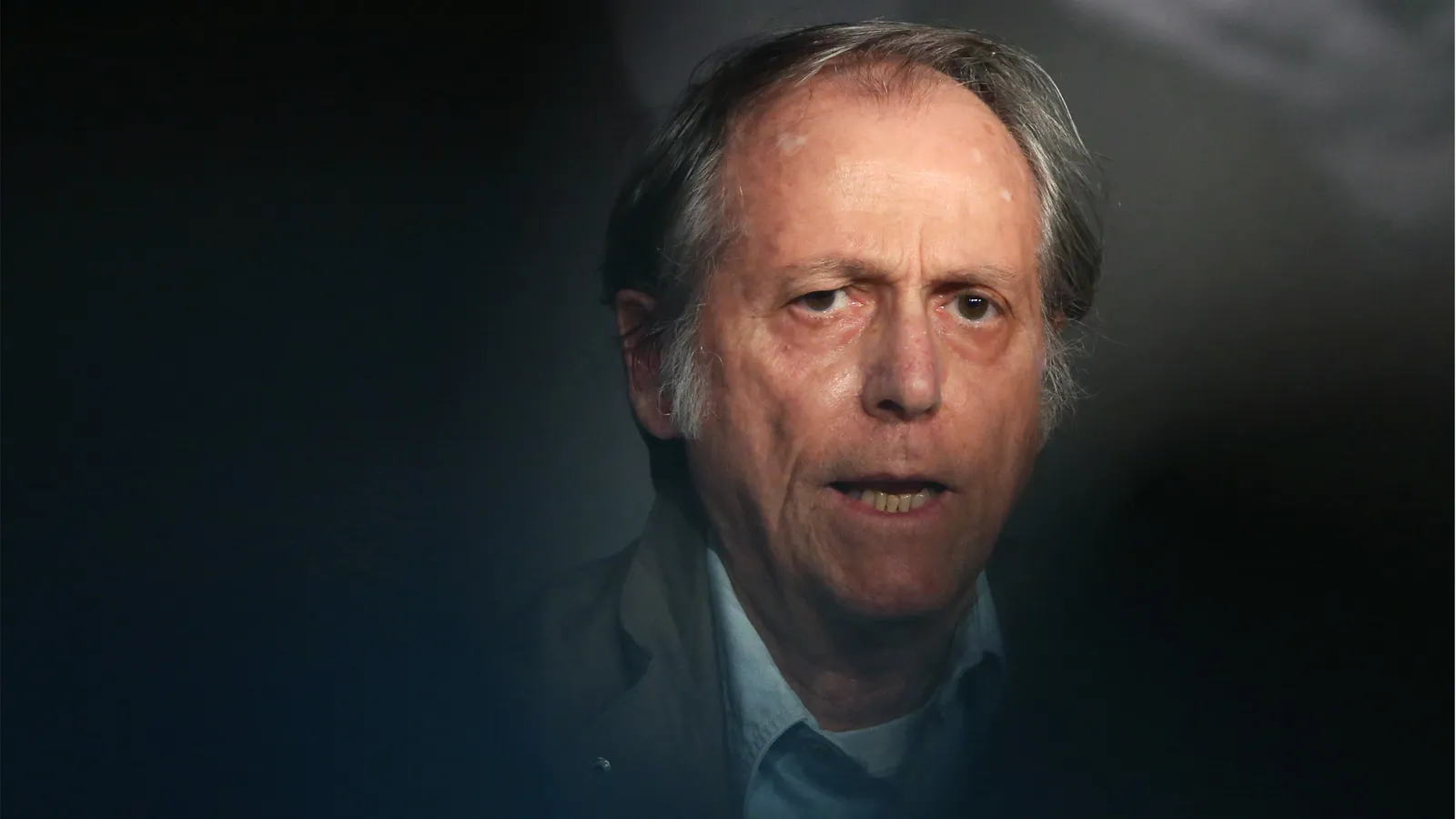
Why Don DeLillo is America's greatest living writer


Why Don DeLillo is America's greatest living writer


(Image credit: Alamy)

By John Self19th December 2022


https://ychef.files.bbci.co.uk/1600x900/p0dq97wt.webp


The writer that inspired Netflix's latest hit White Noise is a dazzling chronicler of modern America, and one of the country's legendary novelists, writes John Self.

"A brilliant story about death and the fear of death," said the original jacket blurb on Don DeLillo's 1985 novel White Noise – adding that the book "is a comedy, of course." This month, Noah Baumbach's Netflix film of White Noise dazzles its way on to our screens, and we're promised "a fascinating, invigorating spectacle," a "thrillingly original" blast of cinematic lustre.

So this feels like a good time to look again at White Noise's author – and consider why Don DeLillo is one of the great novelists of our time. He published his first novel in 1971, and for half a century has been one of those writers who makes us think in a new way: read him for long enough and the world begins to look different.

DeLillo's early novels were about things – advertising (Americana, 1971), sport (End Zone, 1972), rock music (Great Jones Street, 1973). Later in the 1970s he began to grow and experiment more: novels like Ratner's Star (1976), Players (1977) and Running Dog (1978) were playful, intricate and increasingly uninterested in forcing DeLillo's talents into standard literary forms: they mashed up elements of science fiction, thrillers and satire with big-brain subjects (astronomy, economics, social history). And they started to win him a reputation: "There's Norman Mailer, there's Thomas Pynchon, now there's Don DeLillo," gasped the Los Angeles Times on the paperback cover of Running Dog.

But it is widely agreed by his admirers that the next stage of DeLillo's career rang in what we might call his imperial phase. It is on the five-book run of the 1980s and 90s – The Names (1982), White Noise (1985), Libra (1988), Mao II (1991) and Underworld (1997) – that DeLillo's colossal reputation stands. These books are still about things, yes, but they also are the things themselves: highly self-aware literary works, recreations of modern society so intense that they make us see it afresh – intensely DeLillo-esque books about an intensely DeLillo-esque world.

DeLillo is often seen as a visionary, a prescient writer who saw what's coming, but really what he does is observe what was really always there, and focus on it

Let's take these five books and see what it is about DeLillo's writing that makes him stand out among his contemporaries. In The Names, one character says he can "see a shape in the chaos of things". What else are books for? In White Noise, another says "I want to immerse myself in American magic and dread". Look no further.

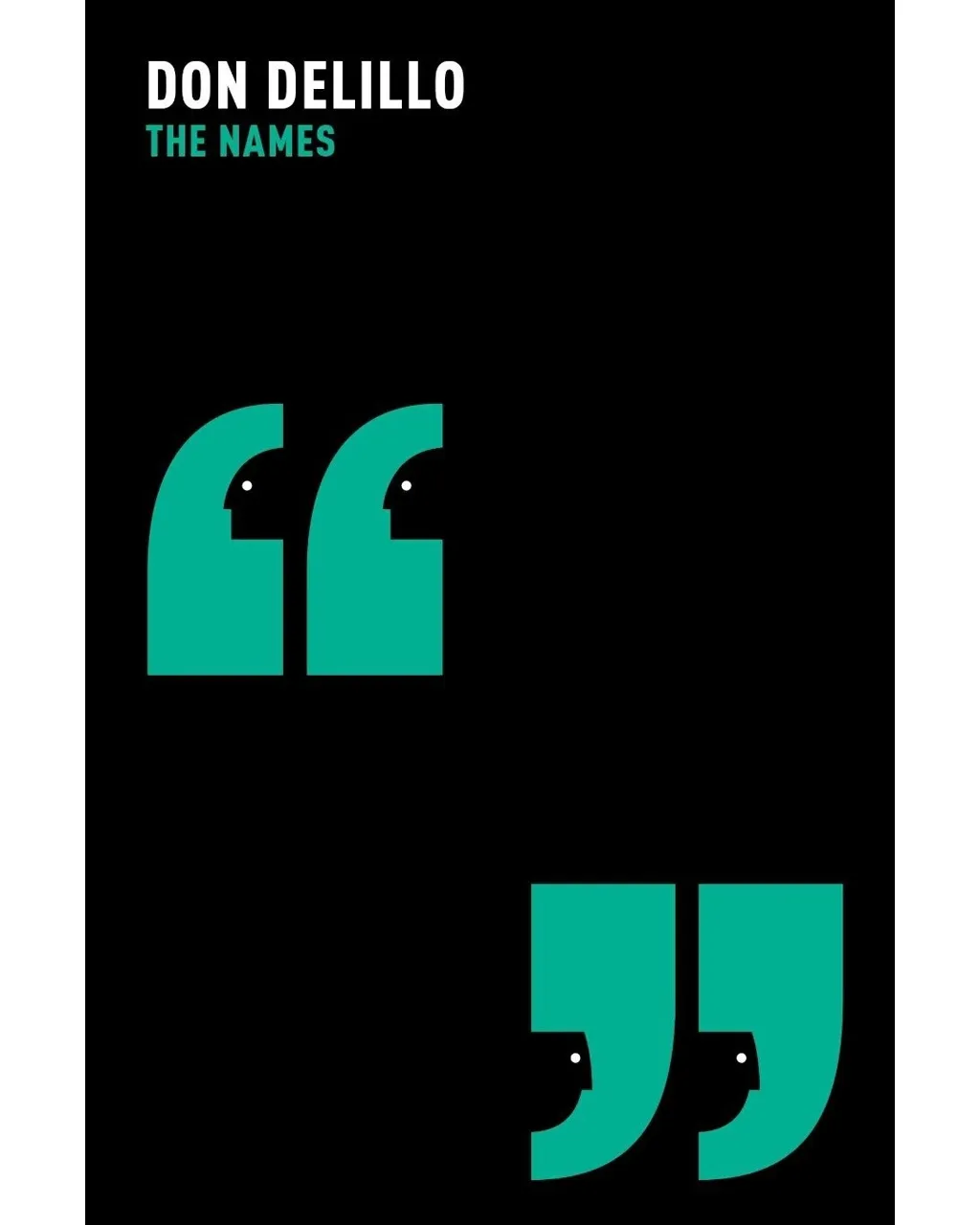
The Names exemplifies DeLillo's first quality: his ultra-modernity. He is often seen as a visionary, a prescient writer who saw what's coming, but really what he does is observe what was really always there, and focus on it.


Focused on Americans abroad and the rise of terrorism, The Names (1982) exemplifies DeLillo's ultra-modernity (Credit: Picador Pan Macmillan)


https://ychef.files.bbci.co.uk/1024x1280/p0dq937w.webp


The Names is about Americans abroad, mostly in Greece and the Middle East. Everything about it is so thoroughly up-to-date that you can see why Geoff Dyer called it "a 21st-Century novel, published in 1982." Its characters have modern, hard-to-describe jobs: the narrator James Axton struggles to say what he does for a living. "Generally I do reviews, I examine figures, make decisions." It's a world where the US is the country that it's always okay to hate: "There's no sense of wrong when you kill an American or blame America for some local disaster." A world where, then as now, "the price of oil was an index to the Western world's anxiety. [...] It told us how bad we felt at a given time."

In The Names DeLillo also noted the rise of terrorism as a focus of the Western world's attention: the plot features a sect that kills people based on their names – and, in a horribly prescient take on the extremes of human appetites, one character wants to film the murders taking place.

In 1982 of course there was no social media, but the groupthink it harnesses is summarised in The Names too: "Masses of people scare me," says one man. "People driven by the same powerful emotion." Even in his earlier novel, 1977's Players, DeLillo spotted what few of us had: that New York's World Trade Center Twin Towers were as much symbols as they were real objects: "The Towers didn't seem permanent. They remained concepts, no less transient for all their bulk than some routine distortion of light." When, in September 2001, Al Qaeda treated them as such a symbol, DeLillo acknowledged that "today, again, the world narrative belongs to terrorists."

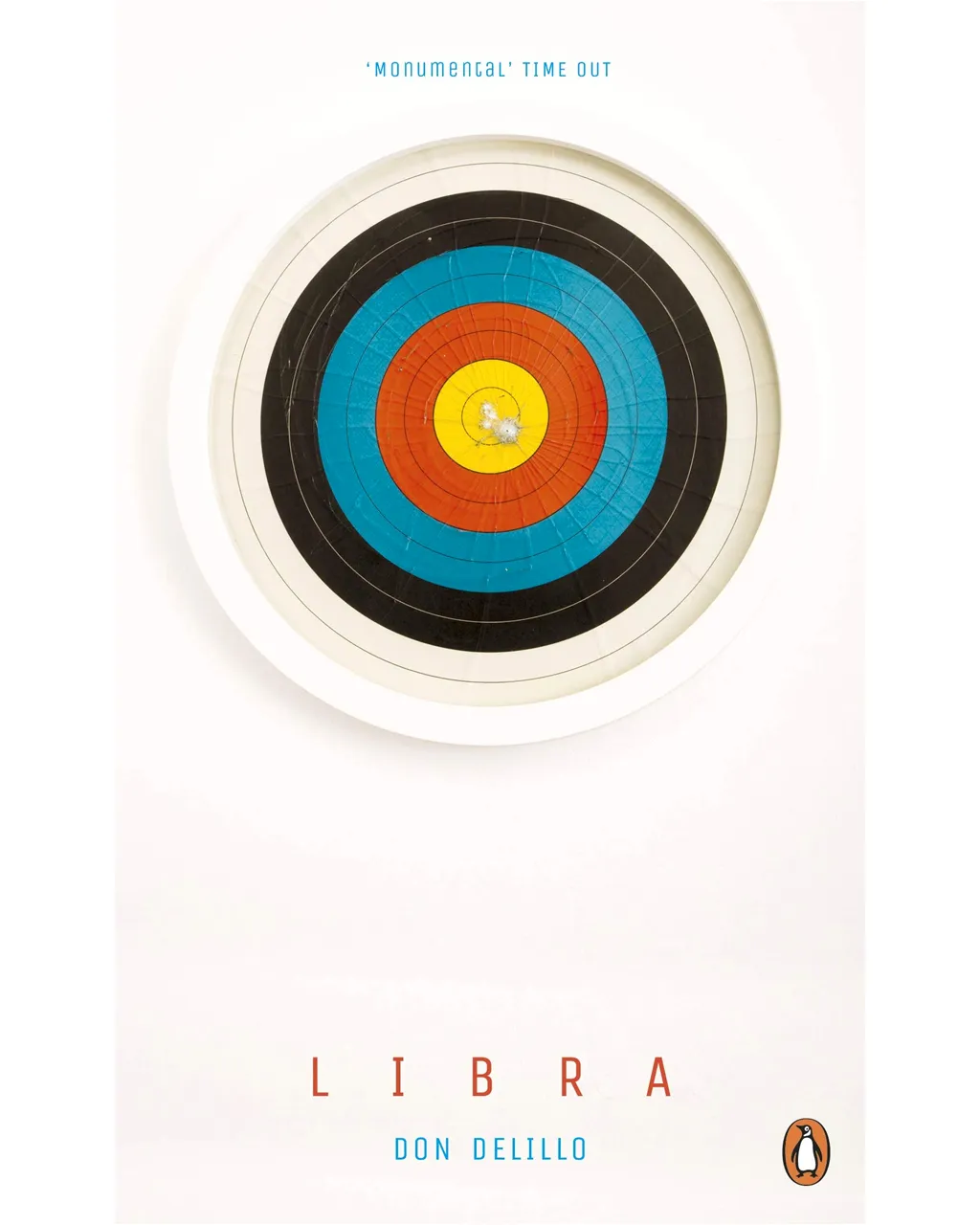
Connected to this modernity is the next key quality of DeLillo's: his restless curiosity about the world. This is perhaps best seen in his 1988 novel Libra, about Lee Harvey Oswald and the assassination of President John F Kennedy, "the seven seconds that broke the back of the American century." (DeLillo decided early on to name the novel after Oswald's zodiac sign. "I was hoping it was Scorpio, because I liked that word. But his birth sign turned out to be Libra, the scales. I settled for that." He also noted that a "motivating element" in writing the novel might have been that "Oswald and I lived within six or seven blocks of each other in the Bronx.")


DeLillo's 1988 novel Libra centred on conspiracy theories about Lee Harvey Oswald and the assassination of John F Kennedy (Credit: Penguin)


https://ychef.files.bbci.co.uk/1024x1280/p0dq9bqk.webp

Libra went in on the ground floor of an industry – the JFK conspiracy theory industry – that others, including Oliver Stone (JFK) and James Ellroy (American Tabloid), would go on to explore and exploit. Little wonder that it was DeLillo's first bestseller: it engages full-throatedly with what DeLillo says the JFK assassination opened up: "What has become unravelled since [then is] the sense of a coherent reality most of us shared" – an observation which could have been written the day before yesterday, with our filter bubbles and self-reinforcing social-media silos.

In all these books, DeLillo is interested not just in these aspects of the world, but in what is hidden from us

This engagement with the outside world renders DeLillo somewhat unfashionable in an age of autofiction and internal stories with no moving parts. He had done it before, too: his debut novel Americana (1971) touched on the manipulations of what would later be called reality television. And he would do it again: Underworld (1997) takes on more or less everything that happened in – or to – the US in the second half of the 20th Century, and Falling Man (2007) was inspired by the collapse of the Twin Towers. In all these books, DeLillo is interested not just in these aspects of the world, but in what is hidden from us. "The American mystery deepens," he wrote in White Noise.

Indeed, White Noise is a fine example of DeLillo's engagement with the world, not least in the lists that fills its pages, emphasising just how crammed our lives today are with stuff. "The stereo sets, radios, personal computers… the cartons of phonograph records and cassettes; the hairdryers and styling irons… the controlled substances, the birth control pills and devices…"

And White Noise (1985) is the perfect way to highlight the next of DeLillo's qualities: the dazzle of his writing style. The fact that his novels are smart, idiosyncratic and sometimes challenging works about big things shouldn't distract us from the point that they're a blast to read. All DeLillo's books offer something nutritious in every paragraph, but White Noise might be the most stylish of all his books.


White Noise – one of DeLillo's most stylish books – takes aim at modern life: consumerism, paranoia and technology (Credit: Netflix)


https://ychef.files.bbci.co.uk/1600x900/p0dq944r.webp

The story, about a college professor who teaches "Hitler studies", takes aim at modern life: consumerism, paranoia, technology. It's full of riffs and jokes: "California deserves whatever it gets," goes one. "Californians invented the concept of lifestyle. This alone warrants their doom." It satirises our reliance on devices and our deadened responses: "The smoke alarm went off in the hallway upstairs, either to let us know the battery had just died or because the house was on fire. We finished our lunch in silence."

In White Noise, people talk in advertising slogans, and savour the bad news that saturates the media: "Only a catastrophe gets our attention. We want them, we depend on them. As long as they happen somewhere else." But in the book, suddenly there's a local catastrophe: the Airborne Toxic Event, which spreads a cloud over the area, leading to mysterious evolving symptoms ("At first they said skin irritation and sweaty palms. But now they say nausea, vomiting and shortness of breath") and creating bizarre conspiracy theories.

The mode of White Noise – like much of DeLillo's mature work – is postmodernism: fragmented, subjective, layered with extra-literary elements. The words that come from the TV and radio are presented like dialogue, as though those devices are characters, fully paid-up members of the household. ("The TV said, 'And other trends that could dramatically impact your portfolio.'") The self-referential media mash of DeLillo's world, where brand names become a mantra (the working title for White Noise was Panasonic, but he was refused permission to use it), makes perfect sense in the 21st Century, where our experiences are endlessly processed, photographed, commented on, reshaped and shared. It's a world that has seen, as the British writer Gordon Burn put it in his book Best and Edwards, "the electronic society of the image – the daily bath we all take in the media – replace the real community of the crowd."

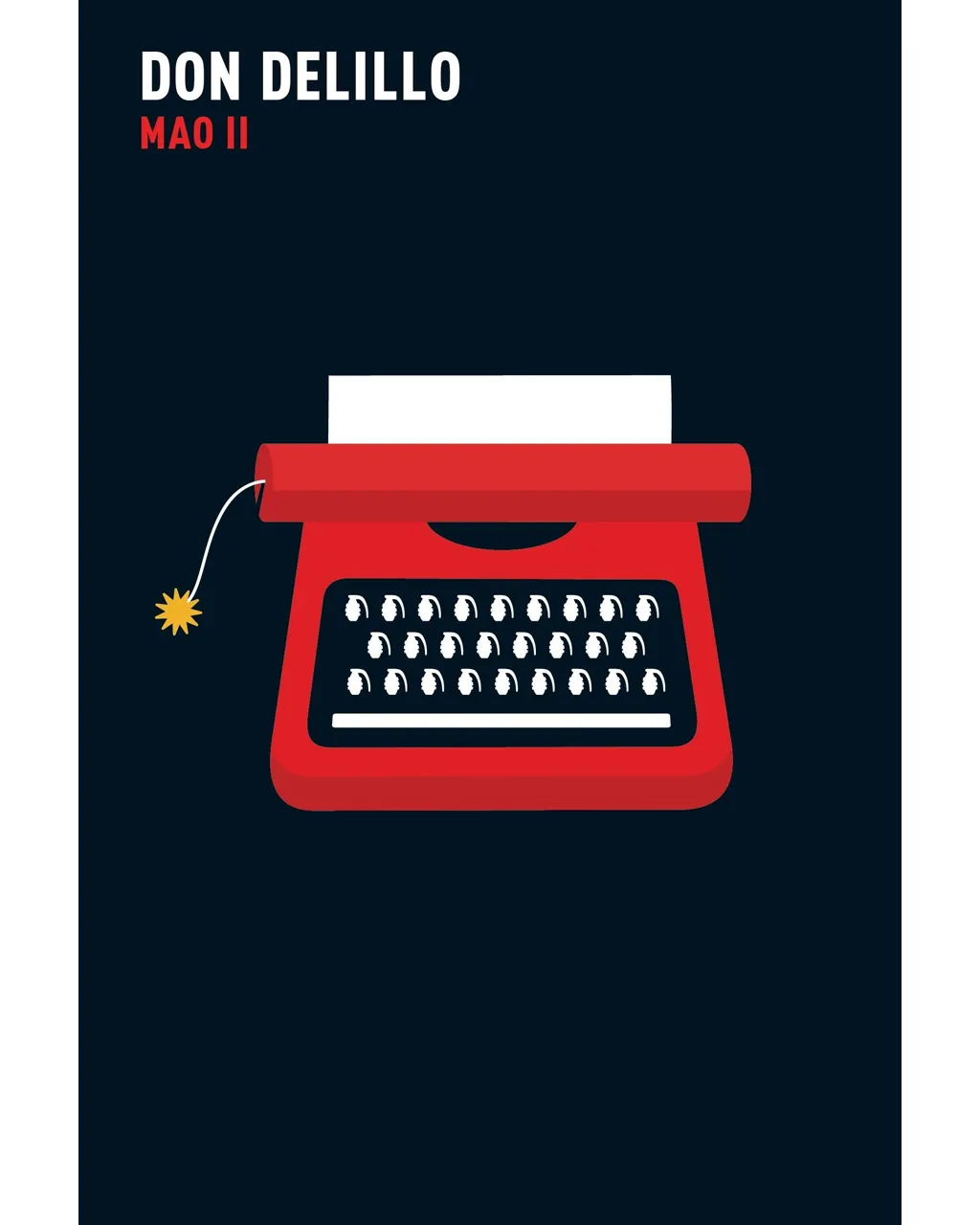
Images, in fact, are key to DeLillo's writing, and exemplify the fourth of his distinct qualities: the coolness of his world view, as seen best of all in Mao II (1991). The title of the novel comes from Andy Warhol's silkscreen prints of Mao Zedong, which flattened and replicated one of the world's great tyrants into an image of colourful celebrity. (It's very DeLillo-esque that Warhol said of his mechanised approach to art: "The reason I'm painting this way is that I want to be a machine.")


DeLillo took the title of his 1991 novel Mao II from Andy Warhol's silkscreen prints of Mao Zedong (Credit: Picador Pan Macmillan)


https://ychef.files.bbci.co.uk/1024x1280/p0dq93gn.webp


In Mao II, a reclusive novelist, Bill Gray, who has become famous for two books written decades earlier, is struggling with whether to publish his third. He's also aware that writers no longer change things. "The future belongs to crowds." Rather than words, DeLillo argues, we are driven by the power of the image, usually of great and horrifying spectacles: the book is structured around televised images of, among other things, the Hillsborough Stadium disaster and the Ayatollah Khomeini's funeral. Do we share in the grief of those suffering when we witness such events, one character wonders, or are we voyeurs?

DeLillo's vision never flinches, never looks away, which may be why his work can seem cold in its unsentimental approach to human horror. We see it in The Names, filming terrorist murders; in White Noise, separating Hitler from his actions through the academic fetish of Hitler studies; in Falling Man, where the book is centred on the iconography of one of the men who jumped from the twin towers. His books riff on cults and death and mass murder, which are a part of life. "Life must become more anxious, more surreal, more image-bound," says a character in Mao II; once again, DeLillo saw what was coming.

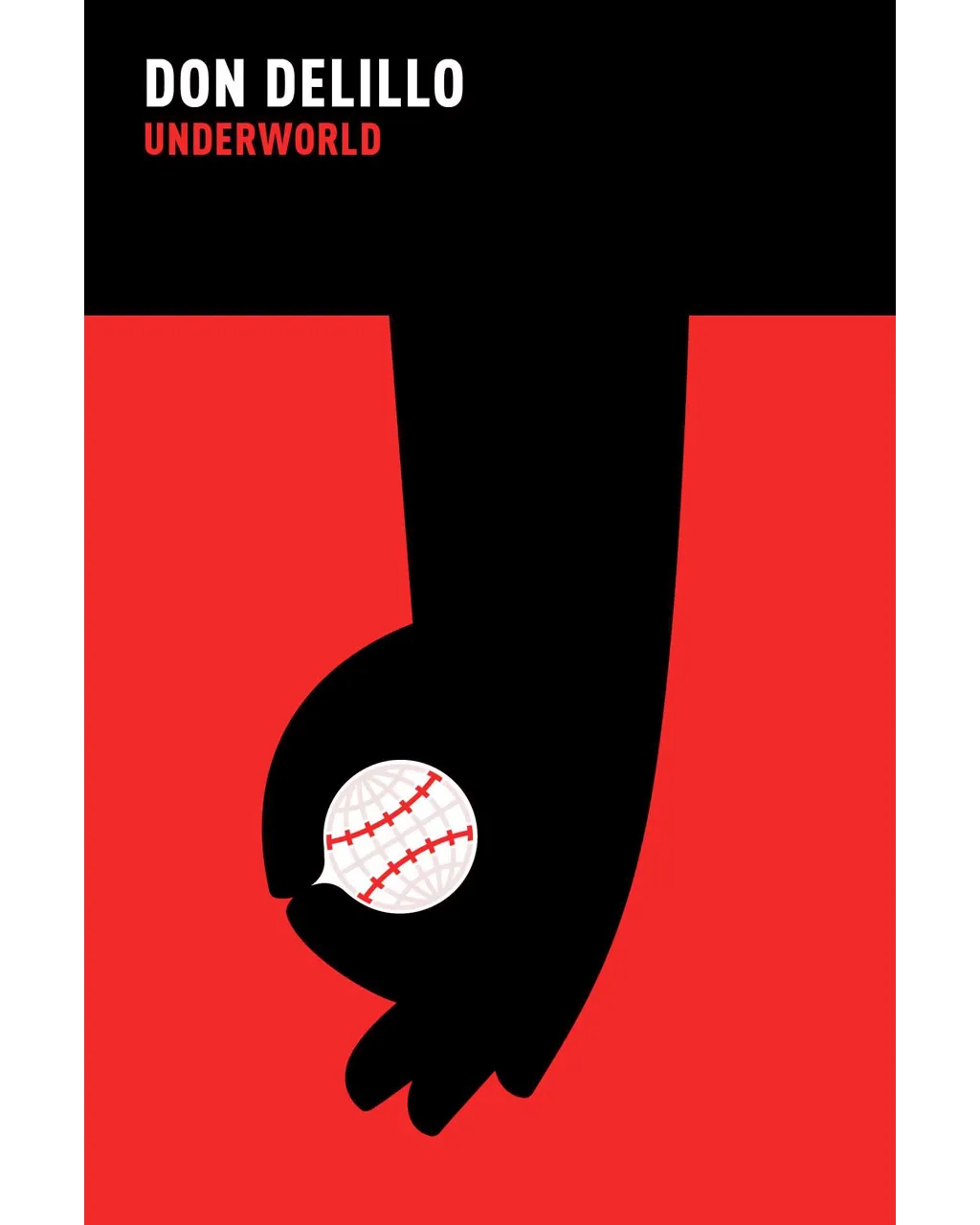
And this takes us to the last of the attributes that help to give DeLillo's work its significance. His willingness to keep going is exemplified by both Underworld (1997) and what came after it. By the mid-1990s, DeLillo's reputation was secure, but he was ambitious to write the sort of book nobody thought him inclined to write, or indeed capable of: a monumental social history that foregrounded character as much as event.


Underworld (1997) was an ambitious novel that encompassed baseball, the bomb and the Cuban Missile Crisis (Credit: Picador Pan Macmillan)


https://ychef.files.bbci.co.uk/1024x1280/p0dq92tx.webp

That such a book could come from a writer who has "never made an outline for any novel that I've written. Never," seemed extraordinary. Underworld represented an expansion of talent that encompassed baseball, the bomb, the Cuban Missile Crisis, real people and invented ones, and left critics open-jawed in awe. "There is no doubt that it renders DeLillo a great novelist," wrote Martin Amis. The epilogue of Underworld even reflects on the internet in a way that makes the metaverse seem like a twinkle in the author's eye. "Is cyberspace a thing within the world or is it the other way around? Which contains the other, and how can you tell for sure?" Not bad for 1997.

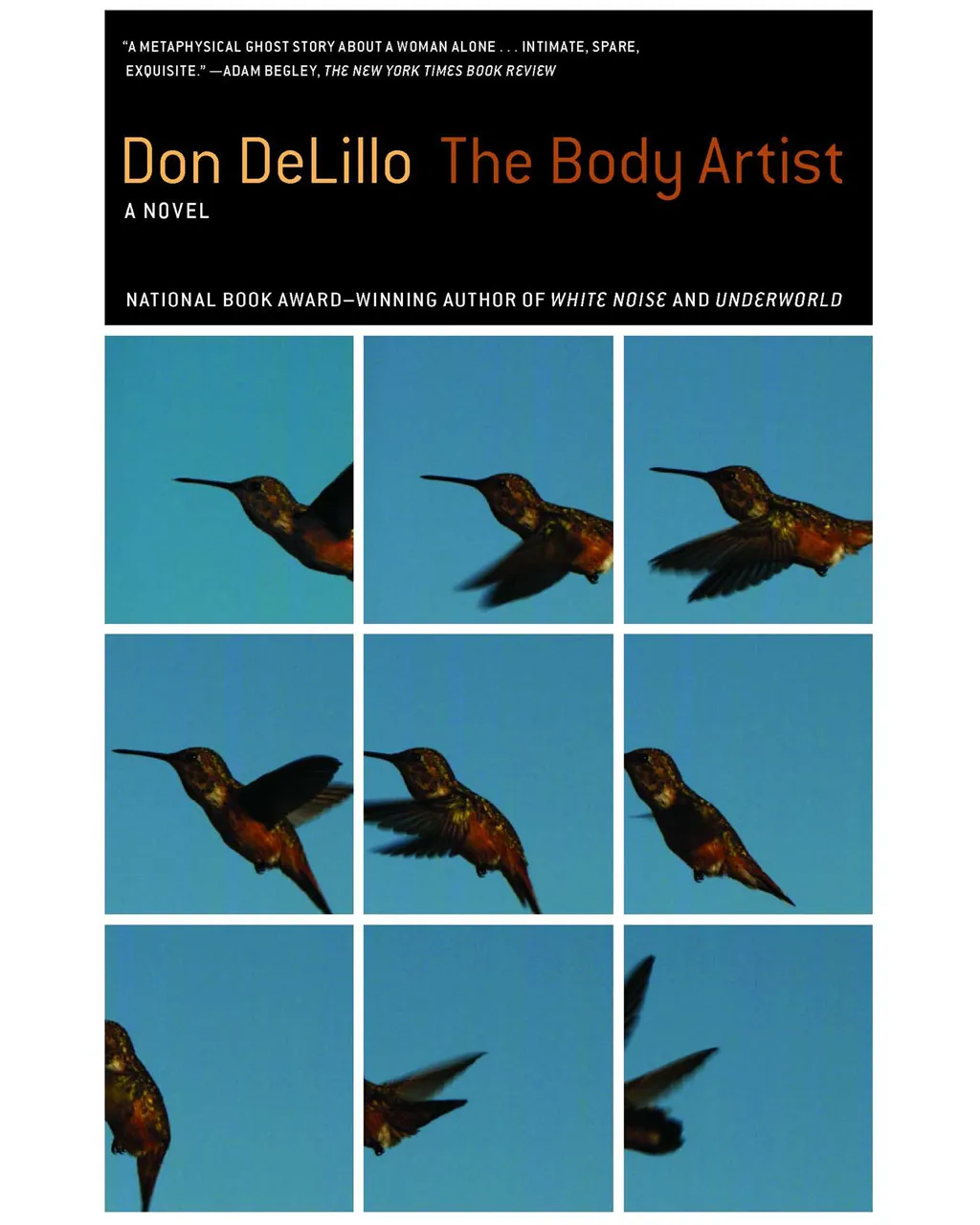
Yet what might be more significant for this factor is what DeLillo did next. Since Underworld was published 25 years ago when the author was 61 – a career summation if ever there was – DeLillo has kept on going. Since then, he has published a further six novels and a collection of stories. These novels have been different from what came before: shorter, mostly, and tighter in focus. The Body Artist (2001), one of the best, is a strange sort of ghost story, with sentences perhaps unmatched in pure stylistic beauty throughout DeLillo's oeuvre.


DeLilllo's later works, such as 2001's The Body Artist, have been different: mostly shorter, and more tightly focused than before (Credit: Simon and Schuster)


https://ychef.files.bbci.co.uk/1024x1280/p0dq92c0.webp

In these books he continues to engage with the modern world, and to explore themes familiar to his readers. Cosmopolis (2003) features Wall Street protests; Point Omega (2010) brings together war and filmmaking in classic DeLillo style. And two years ago, he published his latest work of fiction, The Silence. More novella than novel, this was not a major work – at the age of 84, you're entitled to have your best work behind you. But The Silence feels like his most timely story yet: set in 2022, it features a communications blackout, where phones and screens go blank and people are locked down together. (Unwisely, an editor at DeLillo's US publisher inserted a reference to Covid-19 into the book, to try to make it "more contemporary". Bad idea. "It wasn't going to stay, that's for sure," said DeLillo.)

And not only is DeLillo still writing – he's still doing the publicity rounds, still turning up to promote his books, when a writer of his stature could sit in silence and let the novels sell themselves. He obligingly meets the press with every new book, and practically every Q&A styles itself oxymoronically as "a rare interview with Don DeLillo." "I've been called reclusive a hundred times and I'm not even remotely in that category," he said in 1992.


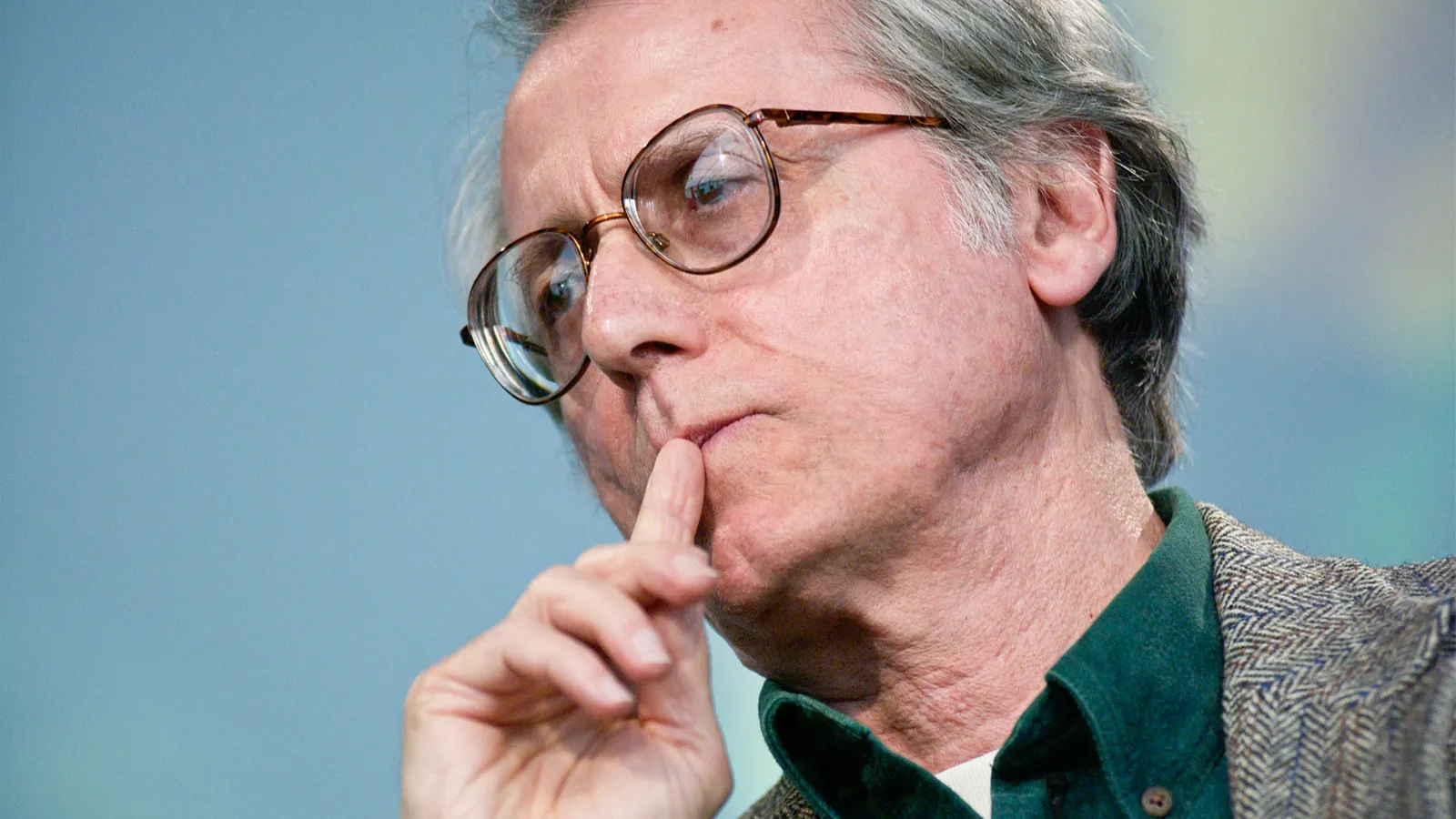
Don DeLillo published his first novel in 1971 – and is considered one of America's greatest living novelists (Credit: Getty Images)


https://ychef.files.bbci.co.uk/1600x900/p0dq954n.webp

You see, DeLillo doesn't need to buttress his reputation with mystery and silence, as a lesser writer might. He is the opposite of Bill Gray in Mao II, the novelist who maintained his own mythology by disappearing after a short run of success.

At one point in Mao II, Bill says, "Do you know why I believe in the novel? It's a democratic shout. Anyone can write a great novel, one great novel." Well, not quite anyone.

White Noise will be available to stream on Netflix in the US on 30 December

Source:

https://www.bbc.com/culture/article/20221213-why-don-delillo-is-americas-greatest-living-writer